Kilimanjaro Altitude Sickness: Symptoms, Prevention & How to Acclimatise
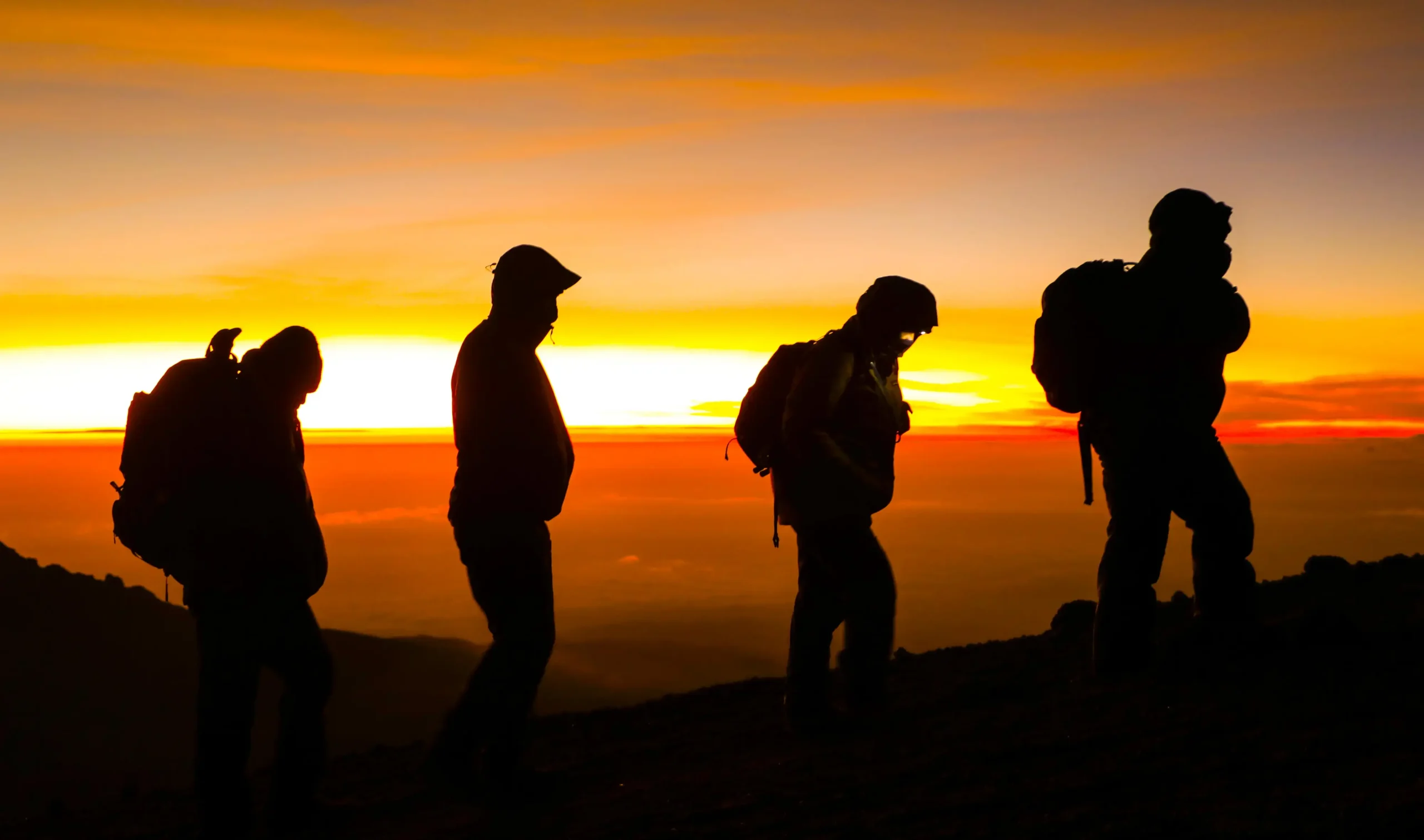
Altitude sickness is the single biggest reason climbers do not reach Uhuru Peak. It is not a matter of fitness — strong, experienced athletes turn back from Kilimanjaro while older, slower climbers summit without difficulty. What determines the outcome is almost entirely how well the body adjusts to the rapid drop in oxygen that begins above 3,000 metres and becomes acute above 4,500 metres.
Understanding what is happening to the body at altitude, knowing the symptoms that indicate a problem, and making the right decisions about pace and route are the difference between a successful summit and a difficult descent. This guide covers all of it: the science of acclimatisation, the three forms altitude sickness takes on Kilimanjaro, how to prevent them, what to do if symptoms appear, and how route choice affects the outcome before the climb even begins.
Climbers who want to understand the full picture before booking can also read the Kilimanjaro routes guide and the guide on how many days to allow for the climb. For those ready to plan dates, the best time to climb Kilimanjaro guide covers seasonal conditions in full.
Key point: roughly 30–50% of Kilimanjaro climbers experience some symptoms of acute mountain sickness. The summit success rate on shorter 5-day routes is approximately 45–50%. On 7–8 day routes, it rises to 85–90%. The difference is almost entirely explained by acclimatisation time, not fitness.
Why Altitude Affects the Body on Kilimanjaro
At sea level, the air contains approximately 21% oxygen and is at standard atmospheric pressure. At the summit of Kilimanjaro — 5,895 metres above sea level — that pressure drops to roughly half its sea-level value. The percentage of oxygen in the air remains the same, but each breath delivers significantly fewer oxygen molecules to the lungs. This condition is known as hypobaric hypoxia: low oxygen caused by low pressure.
The body responds to this by producing more red blood cells to carry what oxygen is available, increasing breathing rate, and adjusting blood chemistry to improve oxygen delivery to the brain and muscles. These processes take time — typically days, not hours. When ascent outpaces the body's ability to adapt, the result is altitude sickness.
Kilimanjaro is particularly demanding in this respect because the mountain rises so quickly from its base. Climbers gain over 4,000 metres of altitude in four to six days on most routes, starting from trailheads between 1,800 and 2,300 metres and ending at a summit of 5,895 metres. There is no option to drive to a high camp and acclimatise there over several weeks, as high-altitude mountaineers on the Himalayan peaks often do. The schedule is compressed by design, and how the body responds to that compression is the central variable in every Kilimanjaro climb.
The Three Types of Altitude Sickness on Kilimanjaro
Altitude sickness presents in three forms of increasing severity. Each is a distinct medical condition, not simply a progression of the same illness, and each demands a different response.
Acute Mountain Sickness (AMS)
AMS is the most common and the mildest form. It typically appears within six to twelve hours of reaching a new altitude, and most commonly at camps above 3,500 metres — Horombo on the Marangu route, Shira on the Lemosho, and Barranco or Karanga on the Machame. Symptoms include:
- Headache — the defining symptom; usually dull and persistent, worsening with exertion
- Nausea or loss of appetite
- Fatigue disproportionate to the effort of the day
- Dizziness or lightheadedness on standing
- Difficulty sleeping or restless, shallow sleep
Mild AMS is not, on its own, a reason to descend. Resting at the same altitude and allowing a day for acclimatisation is often sufficient to resolve the symptoms. The standard field rule is: if symptoms are mild and not worsening, it is safe to rest at the same altitude; if symptoms are worsening or new symptoms appear, descend immediately.
The Golden Rule of altitude: never ascend with symptoms of AMS. If a climber has a headache, nausea, or dizziness at the day's final camp, the next day's ascent should only begin once those symptoms have resolved. Ascending with active AMS significantly increases the risk of progression to HACE.
High Altitude Cerebral Oedema (HACE)
HACE is a severe, life-threatening progression of AMS in which fluid accumulates around the brain. It is uncommon on Kilimanjaro but does occur, most often on the summit push between Barafu Camp (4,673 m) and Uhuru Peak (5,895 m), and at Crater Camp (5,790 m) for groups using that high camp. Symptoms include:
- Severe, worsening headache unresponsive to ibuprofen or paracetamol
- Loss of coordination — staggering, inability to walk a straight line (ataxia)
- Confusion, unusual behaviour, or changes in consciousness
- Extreme fatigue — inability to stand without assistance
- Vomiting
HACE is a medical emergency. The only effective treatment is immediate descent — a minimum of 500–1,000 metres as quickly as safely possible. If the climber cannot descend on their own, they must be evacuated. Supplemental oxygen and dexamethasone (a prescription steroid) can buy time for evacuation but are not substitutes for descent. HACE that is not treated with descent can be fatal within hours.
High Altitude Pulmonary Oedema (HAPE)
HAPE involves fluid accumulation in the lungs rather than the brain. It can develop independently of AMS and HACE, and is actually the more common cause of altitude-related death worldwide. Symptoms include:
- Breathlessness at rest — not just on exertion
- A persistent, dry cough that may progress to a cough producing pink or frothy sputum
- A crackling or gurgling sound in the chest when breathing
- Extreme fatigue
- Cyanosis — blue or grey discolouration of the lips or fingernails
HAPE is also a medical emergency. Like HACE, it requires immediate descent. Supplemental oxygen dramatically improves the condition and should be administered without delay if available. A Gamow bag — a portable hyperbaric chamber carried by some operators — can simulate descent in cases where physical evacuation is not immediately possible. Descent remains the definitive treatment.
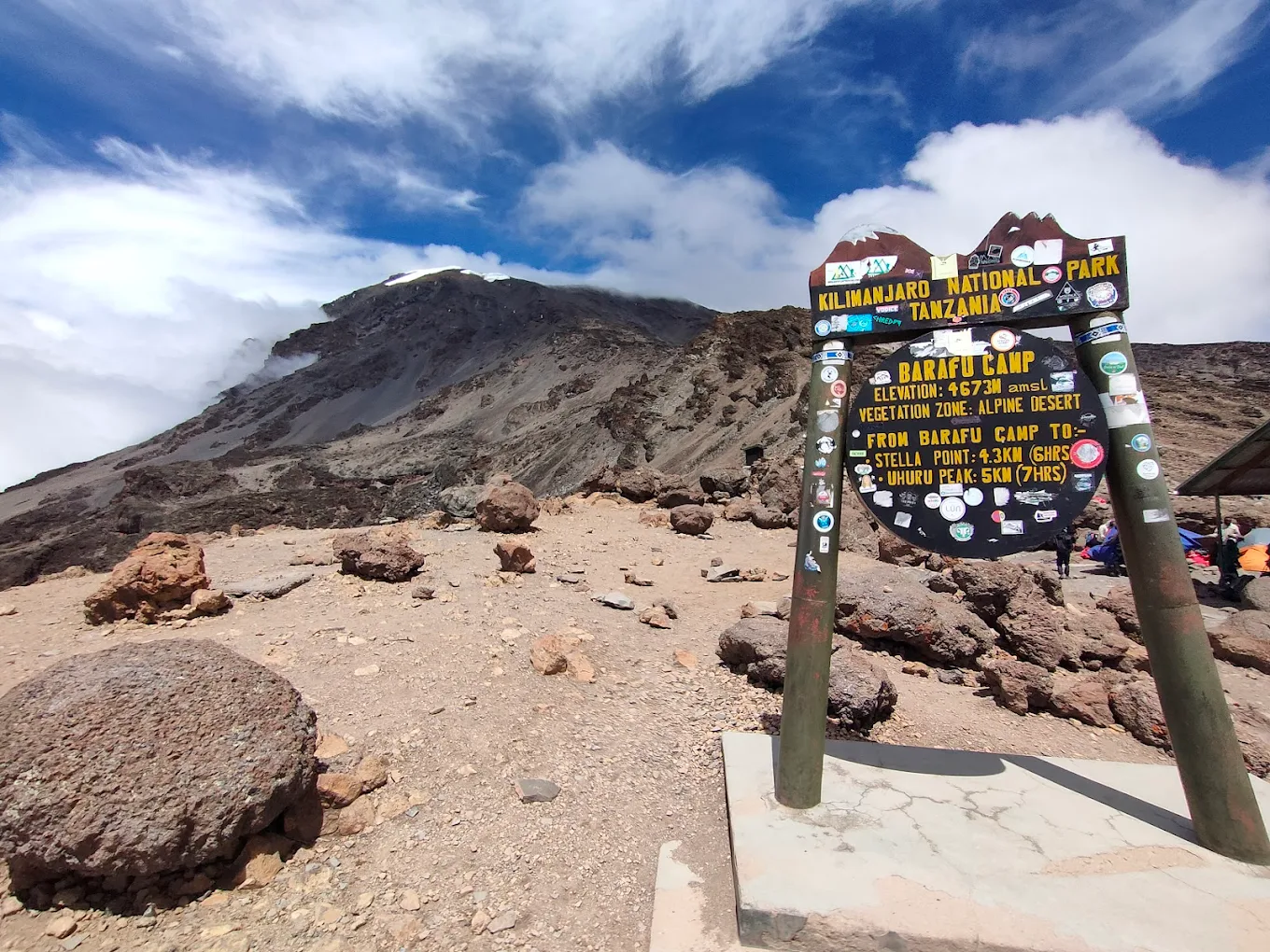
Barafu Camp (4,673 m) on the Machame and Lemosho routes. The summit push from here to Uhuru Peak covers 1,200 metres of altitude gain in a single overnight push — the most altitude-sickness-critical stretch of the climb.
How to Prevent Altitude Sickness on Kilimanjaro
No prevention strategy guarantees a symptom-free climb. But the measures below significantly reduce the risk and give the body the best possible conditions in which to acclimatise.
-
Choose a longer route
The single most effective measure. Seven- and eight-day routes allow the body an extra one to two days to acclimatise at altitude before the summit push. On the Lemosho 8-day, climbers spend a full day at Shira Camp (3,840 m) before ascending further. That one day makes a measurable difference to summit success rates and symptom rates alike.
-
Walk slowly — pole pole
"Pole pole" (slowly slowly in Swahili) is the single most repeated instruction on every Kilimanjaro climb, and with good reason. A slower pace reduces the oxygen demand on the body at altitude, gives more time at each elevation, and significantly reduces the likelihood of triggering AMS. Most first-time climbers walk too fast in the early days.
-
Climb high, sleep low
On routes that allow it — particularly Lemosho and Machame — the itinerary naturally incorporates days where climbers ascend to a higher point before descending to a lower camp to sleep. This pattern accelerates acclimatisation and is one of the most effective tools in high-altitude medicine.
-
Drink 3–4 litres of water daily
Dehydration worsens headaches and fatigue at altitude and can mask or amplify early AMS symptoms. The dry air and increased breathing rate at altitude cause significant moisture loss. Three to four litres per day is the standard guidance for Kilimanjaro; more on summit day. Electrolyte supplements are helpful if appetite is suppressed.
-
Consider Diamox (acetazolamide)
Diamox is a prescription medication that accelerates the acclimatisation process by stimulating faster and deeper breathing. It is not a performance enhancer — it helps the body do more quickly what it would do naturally given more time. The standard preventive dose is 125–250mg twice daily, beginning one to two days before the climb and continuing through summit day. It must be prescribed by a doctor. Common side effects include increased urination, tingling in the fingers, and altered taste of carbonated drinks.
-
Acclimatise before the climb if possible
Spending two to three nights at altitude before starting Kilimanjaro — in Arusha (1,400 m), or better yet in Moshi (800 m) with a day hike to higher ground — provides a small but useful head start. Some operators offer pre-climb nights at high-altitude lodges on the mountain slopes. The benefit is modest but non-zero.
-
Avoid alcohol and sleeping medication
Both suppress breathing during sleep, which is already shallower at altitude. A poor night's sleep at altitude is to be expected and is not dangerous in itself — what is dangerous is suppressing the body's natural response to maintain adequate oxygen saturation. Alcohol also accelerates dehydration.
Diamox on Kilimanjaro: What Climbers Need to Know
Diamox (acetazolamide) is the most commonly prescribed prophylactic for altitude sickness. It works by inhibiting the enzyme carbonic anhydrase in the kidney, which causes a mild metabolic acidosis that stimulates the respiratory centre in the brain to breathe more frequently and deeply. This increases blood oxygen saturation and mimics the effect of days of acclimatisation.
| Factor | Details |
|---|---|
| Typical dose (preventive) | 125–250mg twice daily; start 1–2 days before ascent begins |
| Prescription required? | Yes — consult a travel medicine clinic or GP before departure |
| Who should avoid it | Anyone with a sulfa drug allergy; those with kidney disease; consult a doctor if pregnant or breastfeeding |
| Common side effects | Increased urination (expected and normal), tingling in hands and feet, altered taste of carbonated drinks |
| Does it guarantee summit success? | No — reduces risk and severity of AMS; does not eliminate it |
| Can it mask serious symptoms? | A common concern, but no evidence it masks HACE or HAPE. Climbers should continue to monitor symptoms regardless. |
| Alternative: ibuprofen | Some studies support ibuprofen (600mg three times daily) as an alternative for AMS prevention; less evidence than Diamox but an option for those who cannot take acetazolamide |
Diamox is not a substitute for route selection. Climbers sometimes choose a shorter 5- or 6-day route and rely on Diamox to compensate for the reduced acclimatisation time. This is a poor trade. Diamox helps; a longer route helps more. The safest approach is a longer route with Diamox if appropriate, not one or the other.
Praise can walk through the route options, day-by-day altitude profiles, and the right itinerary length for each climber's schedule and summit goals.
Route Comparison: Altitude Profiles and AMS Risk
Route choice is the most consequential single decision in managing altitude sickness risk on Kilimanjaro. The table below compares the four main routes operated by Nyange Adventures on the key altitude and acclimatisation variables.
| Route | Recommended Days | Highest Camp | Acclimatisation Days | AMS Risk |
|---|---|---|---|---|
| Lemosho | 7–8 days | Barafu 4,673 m | Best — full Shira rest day | Low |
| Machame | 6–7 days | Barafu 4,673 m | Good — climb high sleep low profile | Low–moderate |
| Rongai | 6–7 days | Kibo Hut 4,703 m | Moderate — gradual north-side profile | Moderate |
| Marangu | 5–6 days | Kibo Hut 4,703 m | Least — ascent/descent same path | Higher |
The Lemosho 8-day itinerary is the most frequently recommended route for climbers who are concerned about altitude sickness, are climbing for the first time, or have had altitude problems in the past. The extra day at Shira Camp (3,840 m) before ascending to Lava Tower (4,600 m) and descending to Barranco (3,950 m) for the night creates one of the best natural acclimatisation profiles of any high-altitude trek in the world.
What Happens at Each Altitude Zone
- Trailhead to early camps — Machame Gate, Londorossi, Marangu Gate
- Altitude effects minimal for most people
- Slight breathlessness on steeper sections is normal
- Focus: establish pace, begin hydration routine, conserve energy
- Shira Camp, Horombo, Barranco — most AMS cases begin here
- Mild headache on arrival is common; usually resolves overnight
- Sleep quality degrades — normal; not a cause for concern alone
- Focus: monitor symptoms; do not ascend with a worsening headache
- Karanga Camp, Barafu Camp, Kibo Hut — HACE and HAPE risk zone
- Breathlessness at rest begins; significant fatigue is universal
- Appetite suppression common; forcing caloric intake is important
- Focus: any coordination loss, confusion, or cough at rest — descend
- Stella Point (5,756 m) to Uhuru Peak (5,895 m)
- Oxygen at summit is ~50% of sea-level value
- Severe breathlessness, slow movement, cognitive impairment are normal
- Time at summit is typically 15–30 minutes; descent begins immediately
How Nyange Adventures Monitors Climbers for Altitude Sickness
Every Nyange Adventures Kilimanjaro expedition uses pulse oximeters at each camp from Shira or Barranco upwards. A pulse oximeter measures blood oxygen saturation — the percentage of haemoglobin carrying oxygen — and provides an objective reading to complement the guide's clinical assessment of each climber.
Normal sea-level oxygen saturation is 95–100%. At Barafu Camp (4,673 m), readings of 70–80% are common and expected. The significance is not the absolute number but the trend: a reading that drops sharply below what is expected for that altitude, or that fails to recover after rest, is a warning sign that warrants closer monitoring and may indicate a need to descend.
Heart conditions, asthma, diabetes, and prior high-altitude problems require a specific conversation before booking. Praise can advise on what to discuss with a doctor before committing to a climb.
Other Things to Know Before You Climb
- Previous high-altitude experience does not guarantee immunity. Some people who have climbed to altitude before with no issues develop AMS on a subsequent trip. There is individual variability across climbs, and prior success is a poor predictor of future performance.
- Fitness does not protect against altitude sickness. Cardiovascular fitness helps with the physical demands of the climb but does not accelerate acclimatisation. Highly trained athletes are no more resistant to AMS than moderately fit hikers — and sometimes push through early warning signs because they are accustomed to discomfort.
- Summit night is the most demanding section. The push from Barafu Camp to Uhuru Peak begins between midnight and 1am to reach the summit at sunrise. The combination of altitude, cold (temperatures between −10°C and −20°C), and darkness makes this the stage at which most turnarounds occur.
- Descent cures altitude sickness. The single most effective treatment for all forms of altitude sickness is descent. Even 300–500 metres of descent can dramatically reduce symptoms. Most climbers who turn back due to illness recover fully within an hour or two of descending to a lower camp.
- The guides make the final call. KINAPA regulations require that all Kilimanjaro climbers are accompanied by registered guides at all times. A good guide will advise on symptoms, administer pulse oximetry readings, and — if necessary — recommend or require descent. Their assessment overrides a climber's own determination to push on. This is not a negotiation.
Frequently Asked Questions
What percentage of Kilimanjaro climbers get altitude sickness?
Studies estimate that 30–50% of Kilimanjaro climbers experience some symptoms of AMS during their climb. Mild headache is the most common presentation. Serious altitude illness — HACE or HAPE — is significantly less common but does occur, particularly on faster routes and during the summit push.
Can I predict whether I'll get altitude sickness on Kilimanjaro?
No. There is no reliable predictor of individual susceptibility to altitude sickness. Age, gender, fitness level, and prior altitude experience all have limited predictive value. The only reliable mitigating factors are those within a climber's control: route length, ascent pace, hydration, and medication if prescribed. Some people acclimatise quickly; others struggle on the same itinerary. Prior altitude trips provide a rough guide but are not definitive.
Should I take Diamox for Kilimanjaro?
That decision should be made with a doctor, not a guide or a blog. Diamox is effective at reducing AMS risk and is appropriate for many climbers, but it carries side effects and contraindications that require a clinical assessment. The standard approach is to consult a travel medicine clinic or GP in the months before departure and discuss altitude history, other medications, and any allergies. If Diamox is appropriate, it should begin one to two days before the climb begins.
What is the best Kilimanjaro route to avoid altitude sickness?
The Lemosho 8-day route is widely considered the best route for acclimatisation. Its profile includes a high camp at Lava Tower (4,600 m) followed by descent to Barranco (3,950 m) — a textbook example of climb-high, sleep-low — as well as multiple days at intermediate altitudes before the summit push. The Machame 7-day offers a similar acclimatisation profile with slightly less time at intermediate altitude.
How do I know if my altitude sickness is serious enough to turn back?
The field rules are clear: turn back if symptoms are worsening rather than improving after rest at the same altitude; if there is any loss of coordination or ataxia (staggering); if there is confusion or change in consciousness; or if breathing is laboured at rest. Headache alone, without worsening or any of the above, is not an automatic reason to descend — but ascending with a headache is always wrong. The guide's assessment takes precedence and should be followed without argument.
Does altitude sickness go away on its own?
Mild AMS often resolves with rest at the same altitude over 24–48 hours as the body acclimatises. Serious altitude illness — HACE and HAPE — does not resolve on its own without descent. Attempting to rest and wait out HACE or HAPE at altitude is dangerous and can be fatal. Descent is the only definitive treatment for both conditions.
Is it safe to climb Kilimanjaro with asthma?
Many people with mild to moderate well-controlled asthma climb Kilimanjaro successfully. The cold, dry air at altitude can trigger bronchospasm in some people, so carrying a rescue inhaler is essential. Climbers with asthma should consult a respiratory specialist before committing to the climb, carry full medication, and inform the guide team of their condition before departure from the gate.
What is the summit success rate on Kilimanjaro?
Success rates vary significantly by route and itinerary length. On the 5-day Marangu route, published estimates range from 45–50%. On 7- and 8-day routes including the Lemosho and extended Machame, rates among well-supported groups reach 85–90%. Nyange Adventures' summit success rates on 7-day and longer itineraries consistently exceed 85%, largely due to guide experience, pulse oximetry monitoring, and an emphasis on conservative pacing.
Start Planning Your Kilimanjaro Climb Today
Speak directly with Praise Nyange and our senior safari and Kilimanjaro specialists. We listen carefully, ask the right questions, and design an itinerary that feels unmistakably yours.
No commitment required · Personalised response within 24 hours

Your Safari Specialist
Praise Nyange
Founder & Lead Safari Expert
A decade guiding private safaris across Tanzania's finest parks — every itinerary personally overseen.




