How Much Does a Tanzania Safari Cost? A Complete 2026 Price Guide
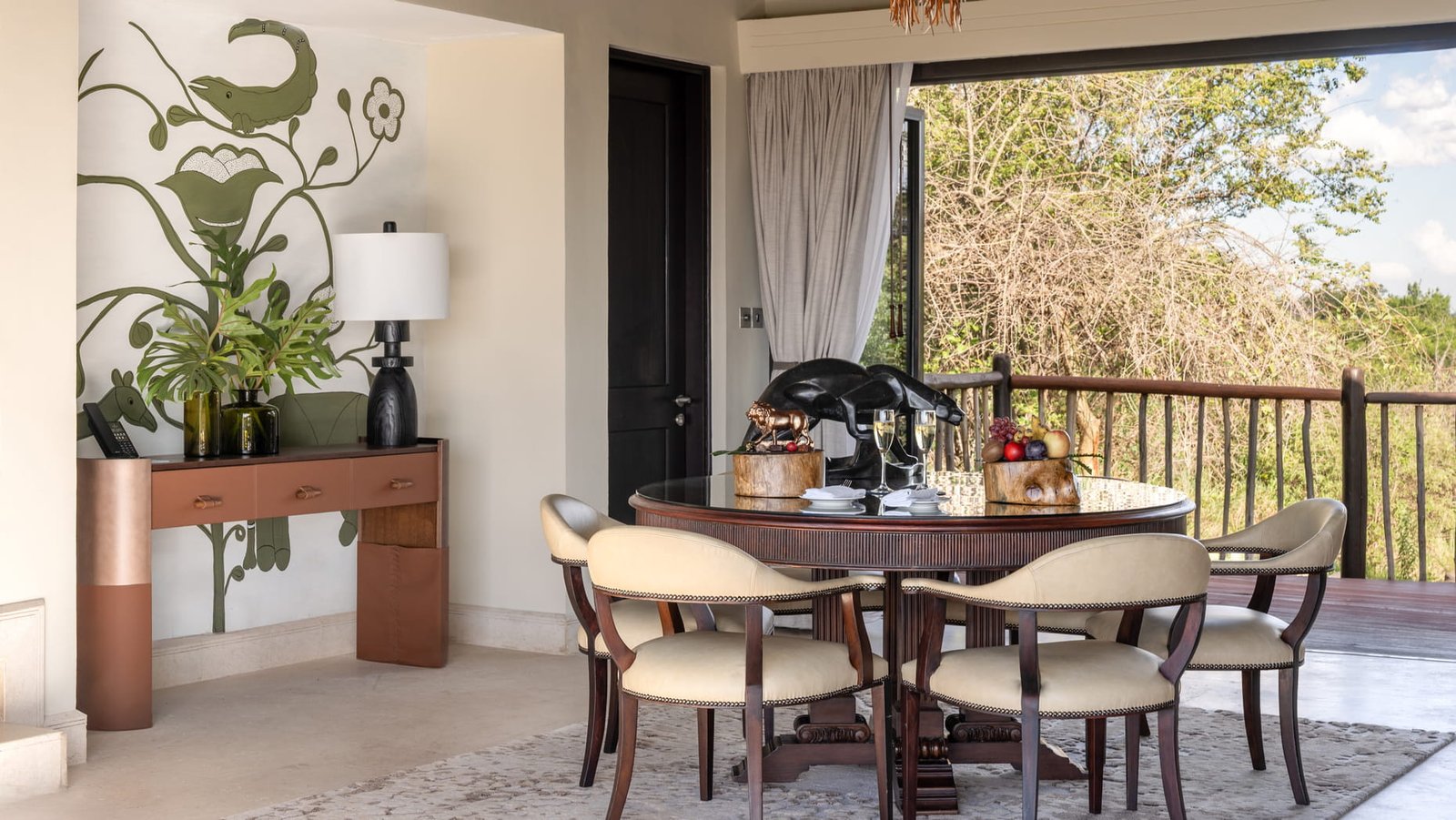
Tanzania safari cost is one of the most searched questions among travelers planning a trip to East Africa, and for good reason: prices quoted online for what looks like the same itinerary can differ by a factor of ten. A camping safari shared with other travelers and a private fly-in safari to a remote luxury camp are both marketed under the same word — "safari" — yet one might cost $200 per person per day and the other $2,000. Neither figure is wrong. They simply describe very different experiences.
This guide breaks down exactly what drives Tanzania safari pricing in 2026, what a realistic budget looks like at each level — budget, mid-range, luxury, and ultra-luxury — and which costs are bundled into a safari package versus which ones are paid separately. The aim is a clear, working number to plan against rather than a single misleading headline figure.
For itinerary options once a budget is set, see the Tanzania safari tours page. Travelers combining a safari with the coast can review safari and Zanzibar packages, and those still deciding on travel dates may find the best time to visit Tanzania guide useful, since season has a direct and significant effect on price.
Quick answer: a Tanzania safari typically costs between $150 and $3,000+ per person, per day, depending on the level of accommodation, whether the vehicle is shared or private, and the time of year. Most travelers booking a quality, private mid-range safari should budget $350–$500 per person per day, all-inclusive. The four biggest cost drivers are: park fees and government taxes (fixed and unavoidable), accommodation standard, group size and vehicle type, and season. The full breakdown of each tier follows below.
What Determines the Cost of a Tanzania Safari
Before comparing tiers, it helps to understand which variables actually move the price. Six factors account for almost all of the spread between a $200-a-day safari and a $1,500-a-day safari.
- Fixed by TANAPA and the Ngorongoro Conservation Area Authority
- Identical for every visitor, every operator
- Typically 20–35% of a total safari cost
- Subject to 18% VAT and periodic revision
- Public campsite to luxury fly-in tented camp
- The single largest driver of price difference
- Mid-range and luxury camps often sit inside the parks
- Budget camps and lodges sit outside park boundaries
- Shared group vehicle vs. private 4x4 and guide
- Larger groups split fixed vehicle and guide costs
- Private safaris cost more but run on the traveler's schedule
- Couples and solo travelers pay a higher per-person rate
- Peak season (July–Sept, late Dec–early Jan): highest rates
- Shoulder season (Jan–Feb, June, Oct–Nov): moderate
- Green season (March–May): lowest rates of the year
- Identical itinerary can vary 20–40% by season alone
- Per-day cost drops slightly on longer itineraries
- Northern circuit (Serengeti, Ngorongoro) is most cost-efficient
- Southern and western circuits add internal flight costs
- More parks visited means more entrance fees stacked
- International agencies typically resell local itineraries
- Markups of 25–40% over ground-operator pricing are common
- A licensed Tanzania-based DMC prices the same trip directly
- Direct booking does not reduce service, only the markup
Share your travel dates and preferred accommodation level for an itemized quote.
Tanzania Safari Cost by Tier (2026 Prices)
The table below summarizes per-person daily pricing across the four tiers used throughout the safari industry, along with what a representative 7-day northern circuit itinerary costs at each level.
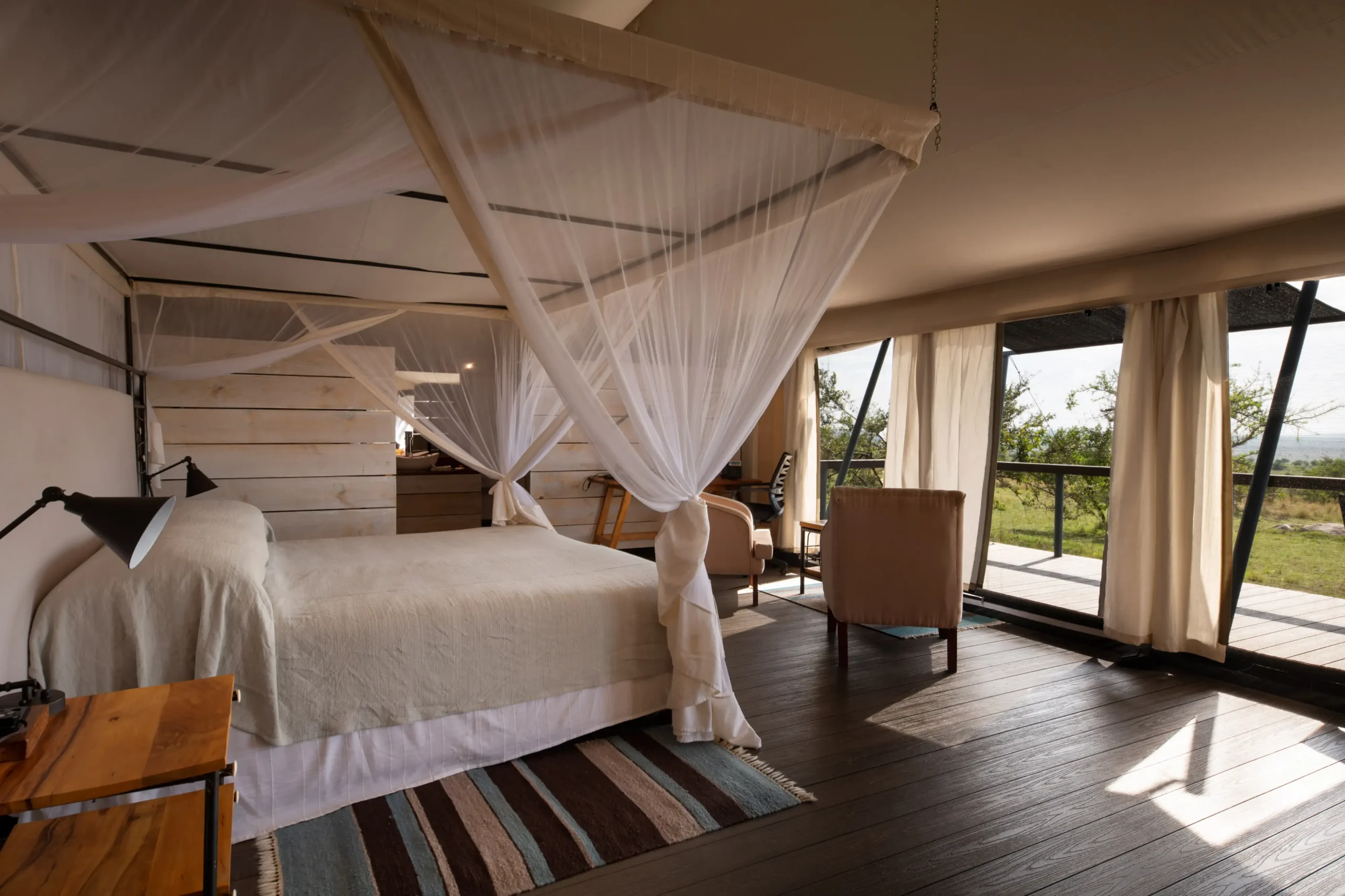
Accommodation type — from camping to fly-in luxury tented camps — is the single biggest factor separating safari price tiers.
| Tier | Per Person, Per Day | 7-Day Northern Circuit | Typical Setup |
|---|---|---|---|
| Budget | $150 – $280 | $1,800 – $3,200 | Shared 4x4 vehicle, public campsites or budget guesthouses, group departure |
| Mid-Range | $350 – $500 | $2,800 – $5,500 | Private vehicle and guide, en-suite lodges or permanent tented camps |
| Luxury | $600 – $1,200 | $5,500 – $9,500 | Private vehicle, premium tented camps inside or bordering the parks |
| Ultra-Luxury | $1,200 – $3,000+ | $10,000+ | Fly-in transfers between camps, exclusive-use camps, dedicated guides |
Most first-time travelers land in the mid-range tier, which offers a private vehicle and guide — meaning the itinerary is not shared with strangers or run on a fixed group schedule — without the cost of fly-in transfers between camps. Budget safaris remain a genuine option for cost-conscious travelers willing to share a vehicle and accept simpler accommodation; they are not a lesser version of the same trip so much as a different one.
What's Included and What's Not Included in a Safari Price
Quoted safari prices are rarely directly comparable unless the inclusions are identical. The table below outlines what a standard Tanzania safari package covers, and what is typically billed separately.
| Item | Included | Notes |
|---|---|---|
| Accommodation for the safari duration | Yes | Standard varies by tier |
| All meals during the safari | Yes | Breakfast, lunch, dinner, snacks on game drives |
| National park entrance fees & government taxes | Yes | Always confirm fees are quoted with 18% VAT included |
| 4x4 safari vehicle & professional driver-guide | Yes | Shared in budget tier, private from mid-range upward |
| Bottled water during game drives | Yes | Standard across nearly all operators |
| Domestic transfers within the safari route | Yes | Road transfers; internal flights usually quoted separately |
| International flights to Tanzania | No | Booked independently by the traveler |
| Tanzania visa fee | No | Paid on arrival or via e-visa |
| Tips and gratuities | No | Standard but separate; see additional costs below |
| Travel and medical insurance | No | Strongly recommended for all safari travel |
| Alcoholic beverages | Varies | Included at some luxury camps, billed separately elsewhere |
| Hot air balloon safari, Maasai village visit, walking safari | Optional | Booked as add-ons; priced separately below |
Tanzania National Park Fees Explained
Park fees are set by TANAPA (Tanzania National Parks Authority) for most parks and by the Ngorongoro Conservation Area Authority (NCAA) for the Ngorongoro Crater. These fees are identical regardless of which operator is booked, are reviewed periodically, and form a fixed cost floor underneath every safari quote.
| Park / Area | Entry Fee (per person, per 24 hrs) | Notes |
|---|---|---|
| Serengeti National Park | $83 | 18% VAT Included; among the highest park fees in Tanzania |
| Ngorongoro Conservation Area | $71 | 18% VAT Included and a separate crater descent fee, below |
| Ngorongoro Crater descent | $295 per vehicle, per descent | One-time fee per vehicle entering the crater floor |
| Tarangire & Lake Manyara | $59 | 18% VAT Included |
| Arusha National Park | $59 | 18% VAT Included |
| Special / wilderness campsites | $35 – $59 per person, per night | On top of standard park entry fee |
Park fees change periodically. Rates above reflect 2026 published ranges across major parks and are quoted before adding VAT unless stated. Fee schedules are set by TANAPA and the NCAA, not by tour operators, and can be revised with limited notice. Any safari quote should state clearly whether park fees are already included and whether VAT has been added.
Group Safari vs. Private Safari: Which Costs Less
Vehicle and guide costs are largely fixed per day regardless of how many people are inside the vehicle, which makes group size one of the most direct levers on price. A scheduled group departure splits that fixed cost across multiple travelers, typically reducing the per-person rate by 30–50% compared with a fully private safari of the same standard.
The trade-off is flexibility. A group safari runs on a fixed itinerary and schedule shared with other travelers. A private safari — a dedicated vehicle, guide, and pace set by the traveler — costs more per person but allows the route, stops, and timing to be adjusted throughout the trip. Couples and solo travelers tend to see the largest gap between the two options, since there is no group to share fixed costs with; a family or group of four to six often finds private and small-group pricing converge.
Get a side-by-side quote for a private safari versus a scheduled group departure on the same route.
How Season Affects Tanzania Safari Prices
Season is the variable most within a traveler's control, and the one that moves price the most for an otherwise identical itinerary.
- Peak season (July–September, late December–early January): Highest accommodation rates and the most limited availability, driven by the Mara River crossings and the holiday period. Lodges in the northern Serengeti should be booked 6–12 months in advance.
- Shoulder season (January–February, June, October–November): A reliable middle ground — good weather most days, meaningfully lower rates than peak, and easier last-minute availability.
- Green season (March–May): The lowest rates of the year, often 30–50% below peak-season pricing for the same camps and route. Some southern-circuit camps close briefly in April.
A full month-by-month breakdown of weather, the wildebeest migration, and which months suit which priorities is covered in the best time to visit Tanzania guide.
Additional Costs to Budget For
Beyond the package price itself, several recurring costs apply to nearly every Tanzania safari and should be factored into an overall budget.
| Item | Typical Cost | Notes |
|---|---|---|
| Driver-guide tip | $15 – $25 per person, per day | Paid directly at the end of the safari |
| Lodge / camp staff tip | $10 – $15 per person, per day | Usually pooled via a communal tip box |
| Tanzania visa | $50 – $100 | Varies by nationality; e-visa available in advance |
| International flights to Kilimanjaro Intl. (JRO) | $700 – $1,800+ | Depends on origin, season, and how far in advance booked |
| Travel & medical insurance | $50 – $150 | Recommended for all safari travel; some camps require proof of evacuation cover |
| Hot air balloon safari | $450 – $599 per person | Optional add-on, most popular in the Serengeti |
| Maasai village visit | $30 – $50 per person | Optional cultural add-on |
| Walking safari permit | $25 – $50 per person | Includes mandatory armed ranger escort in most parks |
Budget planning tip: beyond the safari package, most travelers should set aside an additional $1,000–$2,500 per person to cover international flights, visa, tips, insurance, and at least one optional activity. This figure varies significantly by point of origin and is the line item most commonly left out of safari budgets.
How to Reduce Tanzania Safari Costs Without Compromising Quality
- Travel in shoulder or green season. January–February and March–May offer 20–50% savings over peak season on the same itinerary and accommodation.
- Book direct with a licensed Tanzania-based ground operator. International agencies typically resell local itineraries at a markup of 25–40%; a Tanzania-based DMC prices the same trip without that layer.
- Join a scheduled small-group departure rather than booking a fully private safari, particularly for couples or solo travelers, where shared-vehicle pricing offers the largest savings.
- Concentrate on the northern circuit. Serengeti, Ngorongoro, Tarangire, and Lake Manyara are reachable by road, avoiding the internal flight costs associated with the southern and western circuits.
- Choose fewer parks for longer stays rather than a fast-moving multi-park route. Fewer transfers and entrance-fee resets typically lower the total cost without reducing wildlife viewing quality.
- Treat optional activities as optional. A balloon safari is the single most expensive add-on; prioritizing it selectively, rather than by default, keeps the core safari budget intact.
An itemized quote breaks down accommodation, park fees, and transport line by line.
Frequently Asked Questions
What is the average cost of a Tanzania safari per day?
Most travelers booking a private, mid-range safari should expect to pay $350–$500 per person, per day, all-inclusive of accommodation, meals, park fees, vehicle, and guide. Budget options start around $150–$280 per day, and luxury fly-in safaris range from $600 to over $1,200 per day.
Is Tanzania more expensive than Kenya for a safari?
Tanzania's park fees, particularly for the Serengeti and Ngorongoro, are generally higher than Kenya's equivalent parks, and this is reflected in overall safari pricing. In return, Tanzania's parks are typically less crowded and cover a larger combined wilderness area, which many travelers consider a worthwhile trade-off.
What is the cheapest way to do a Tanzania safari?
The lowest-cost approach combines a scheduled group departure, budget camping accommodation, the northern circuit only, and travel during the green season (March–May). This combination can bring per-person, per-day costs down to $150–$200 while still covering the Serengeti and Ngorongoro Crater.
Do Tanzania safari prices include park fees?
A properly structured safari quote should include all national park entrance fees and the associated 18% VAT. It is worth confirming this explicitly with any operator, since some lower headline prices exclude park fees and add them as a separate charge.
How much should I tip on a Tanzania safari?
A standard guideline is $15–$25 per person, per day for the driver-guide, and $10–$15 per person, per day for lodge or camp staff, typically pooled into a shared tip box. Tips are paid directly at the end of the trip and are not included in the package price.
Is a 5-day or 7-day Tanzania safari better value?
A 7-day itinerary generally offers better value per day, since fixed costs such as transfers and the first day's vehicle positioning are spread across more days. A 5-day safari is sufficient to cover the Serengeti and Ngorongoro Crater, but a 7-day route allows for the western corridor or southern Serengeti without feeling rushed.
Are international flights included in a Tanzania safari package?
No. Safari package prices cover the on-the-ground portion of the trip — accommodation, meals, park fees, vehicle, and guide. International flights to Kilimanjaro International Airport (JRO) are booked separately and typically range from $700 to $1,800 or more depending on origin and season.
How much does a family of four pay for a Tanzania safari?
A family of four traveling together typically pays less per person than a couple, since vehicle and guide costs are shared across more travelers. For a mid-range 7-day northern circuit safari, total costs commonly fall between $10,000 and $16,000 for a family of four, before international flights.
Start Planning Your Tanzania Safari Today
Speak directly with Praise Nyange and our senior safari and Kilimanjaro specialists. We listen carefully, ask the right questions, and design an itinerary that feels unmistakably yours.
No commitment required · Personalised response within 24 hours

Your Safari Specialist
Praise Nyange
Founder & Lead Safari Expert
A decade guiding private safaris across Tanzania's finest parks — every itinerary personally overseen.