

Kilimanjaro Group Climbs 2027 – Fixed Group Departures, Dates & Prices
Climb Kilimanjaro. Share the Journey. Sleep at the Farm. Plant a Tree That Stays.
Looking for Kilimanjaro group climbs in 2027? Join one of our scheduled Kilimanjaro group departures on the Lemosho, Machame, Marangu or Rongai route, meet your mountain team, and share the trail with travellers from around the world. After your climb, we bring you down to our own Kibo View Farm Lodge for a farm-to-table stay — and before you fly home, you'll plant a Legacy Tree in your name.
30% Deposit · Guaranteed Departures · No Hidden Fees
2027 Departures Now Open
Kilimanjaro Group Departures 2027 – Fixed Dates on Lemosho, Machame, Marangu & Rongai
Planning your Kilimanjaro climb early gives you more choice of routes and dates. Our Kilimanjaro group departures for 2027 are designed for solo travellers, couples, friends and small groups who would rather join a scheduled climb than arrange a private trek from scratch.
Every fixed Kilimanjaro group climb with Nyange Adventures is built around three things — the climb itself, a night at our own Kibo View Farm Lodge, and a tree you plant with your own hands before you leave Tanzania. Most Kilimanjaro trips end at the summit; ours continues at the farm.
We run 2027 group departures on the Lemosho, Machame and Marangu routes every month from January through December 2027. We pause fixed departures in March and April, Kilimanjaro's wettest stretch of the year — see our full best time to climb Kilimanjaro guide for how the seasons shape a summit attempt. In May, as the rains ease off, we switch to the Rongai route only, since it approaches the mountain from the drier northern side while the southern trails are still settling.
Groups stay small and every date on this page is a guaranteed departure — your climb goes ahead once you book, with no minimum group size required.
Why Climb With a Group
Why Join a Kilimanjaro Group Climb?
A group climb is the most straightforward way to reach the summit of Kilimanjaro without paying for a private crew of your own. On a private climb, you cover the full cost of your guides, porters, cook and camping equipment by yourself. On a group departure, that same crew and those same logistics are shared across the trekkers booked on that date, which brings the per-person cost down substantially — without cutting corners on safety, food or support.
You do not need to arrive in Tanzania with a group already organised. Most of our climbers travel on their own and meet their fellow trekkers for the first time at the pre-climb briefing in Moshi, then spend the next several days walking, eating and resting together as a team.
You Share the Mountain, Not Just the Cost
Meet travellers from different countries — it's common to have a dozen or more nationalities represented on a single group departure.
Share the experience of reaching Uhuru Peak alongside people who understand exactly what that final push before dawn cost you.
Lean on an experienced local mountain crew — guides, porters and a cook dedicated to your group from gate to summit.
Join a fixed departure that fits your travel plans, rather than waiting on a private group of your own to come together.
Avoid the higher per-person cost of booking a fully private climb, without giving up guide quality or safety standards.
Make friends along the trail — for many climbers, the people they meet on Kilimanjaro become one of the most memorable parts of the whole trip.
After the Climb, We Plant
Every climber who summits with us comes down to Kibo View Farm and plants a tree of their own. Here's what that moment looks like.
Beyond the Summit
What Makes Our Kilimanjaro Group Climbs Different?
Climbing Kilimanjaro is not simply about reaching the summit. It's about how you experience the mountain, the people you meet, and the memories you take home. With Nyange Adventures, your journey continues after the trail.
Local Tanzanian Mountain Team
Your climb is organised and supported by a local Tanzania-based team who understand the mountain, its environment and the communities around it. Our mountain crew is there to guide you, support you and help you enjoy the journey safely, not just get you up and down as quickly as possible.
Small Group Experience
We believe a group climb should still feel personal. Our aim is to keep groups at a comfortable size so you can get to know your fellow travellers over the course of the climb and still receive genuine, individual attention from the mountain team when it matters most.
Carefully Planned Itineraries
We don't believe climbing Kilimanjaro should be a race. Our itineraries are built around a steady walking pace, proper rest at each camp, and sensible altitude management — not the shortest possible schedule.
Your Experience Continues at the Farm
After the mountain, we take you to Kibo View Farm for a different side of Tanzania. Here you can slow down, enjoy fresh food, relax and connect with the local environment before you head home.
Leave a Legacy Behind
Every climber has the opportunity to plant a tree as part of our Legacy Tree experience. You climb one of Africa's great mountains. Then you leave something growing behind, long after you've flown home.
What Climbers Say
451 Reviews, 4.9 Out of 5 on TripAdvisor
Climbed the 7-day Lemosho route with her husband and says the guides, cook and porter team made the difference — a strong crew is what gets you up the mountain, not just personal grit.
Summited the 8-day Lemosho route with his son and credits the guide team for pacing them through the hardest stretch, admitting the mountain was tougher than either of them expected.
Chose the Machame route with a friend and says the guiding team's experience carried them through summit night, calling their guides some of the most capable he's climbed with.
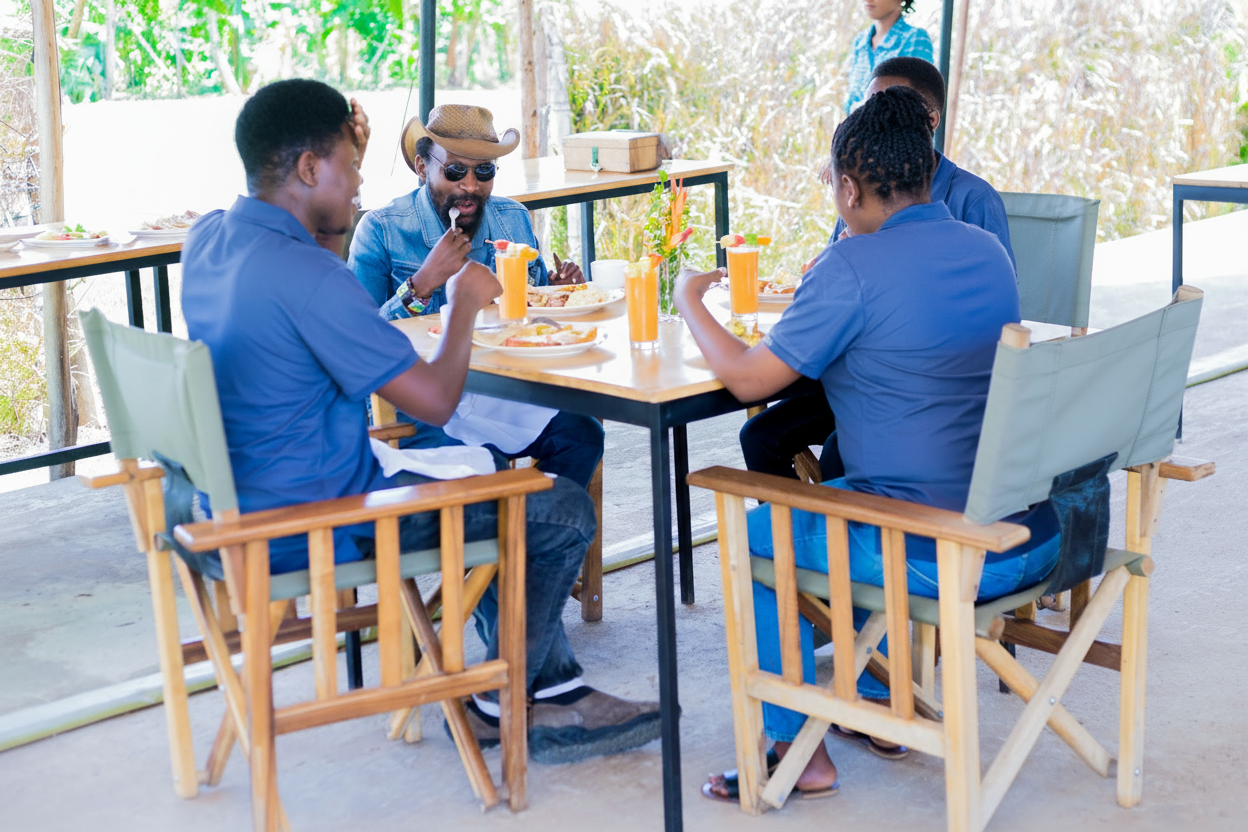
Dinner made from what's grown on the farm
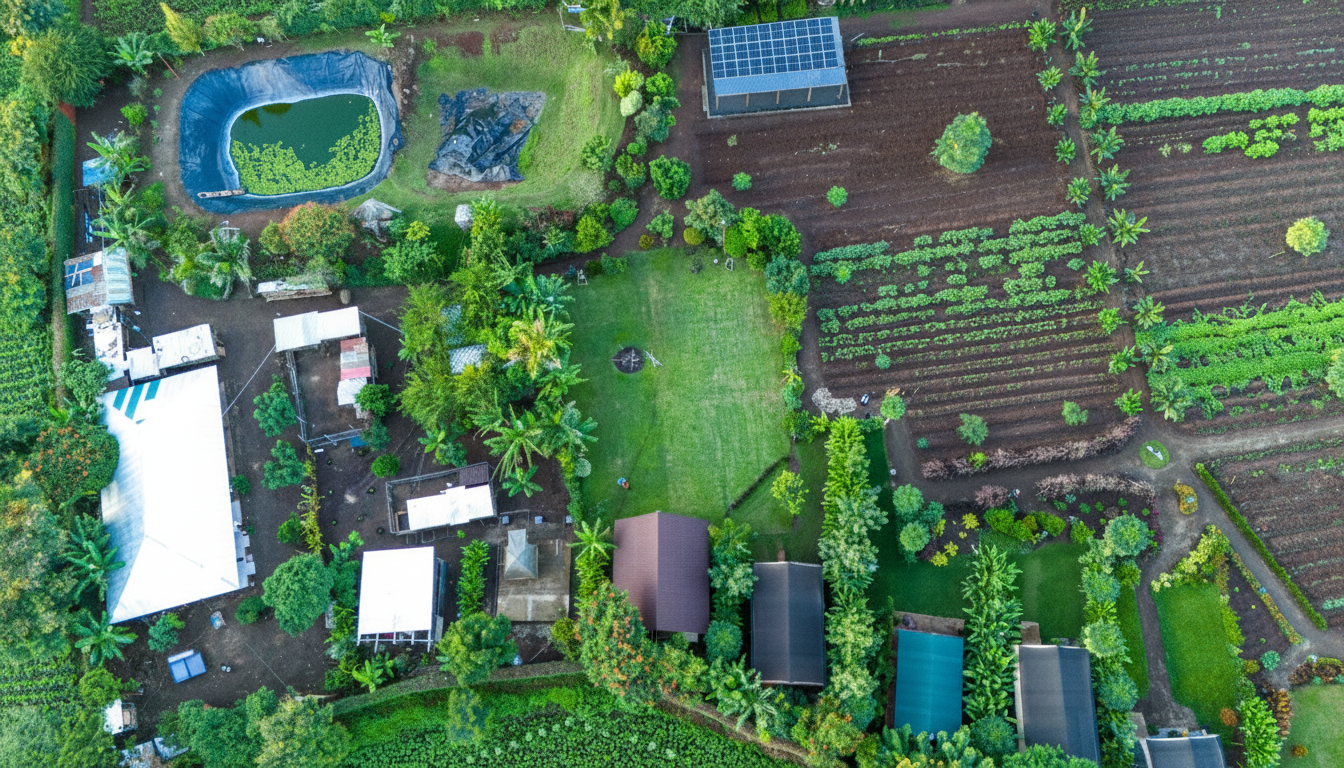
The garden your meals come from
The Farm
Stay at Kibo View Farm After Your Climb
After several days on Kilimanjaro, there's something special about slowing down. At Kibo View Farm Lodge, you can relax away from the busy pace of the mountain and experience a more personal, unhurried side of Tanzania.
Kibo View Farm Lodge is our own farm at the foot of Kilimanjaro — not a hotel with a garden out back for show, but a working farm that happens to have rooms. Enjoy fresh meals, time outdoors, and the peaceful surroundings of the farm, with breakfast, lunch and dinner featuring fresh produce grown and locally sourced wherever seasonally available.
This is more than just another night in a hotel. It gives you time to reflect on your climb, meet local people, and enjoy Tanzania at a slower pace before you fly home.
While You're There
Stay a little longer and there's more to do than eat well: a guided walk through the farm, a coffee tour where you pick and roast your own beans, and a traditional cooking class if you want to learn the dishes yourself. See more of the farm at kiboviewfarm.com.
- Farm-to-table breakfast, lunch and dinner
- Guided farm tour, coffee tour and cooking class
- A quiet night before your climb to settle in
- A proper bed and hot shower waiting for you after the summit
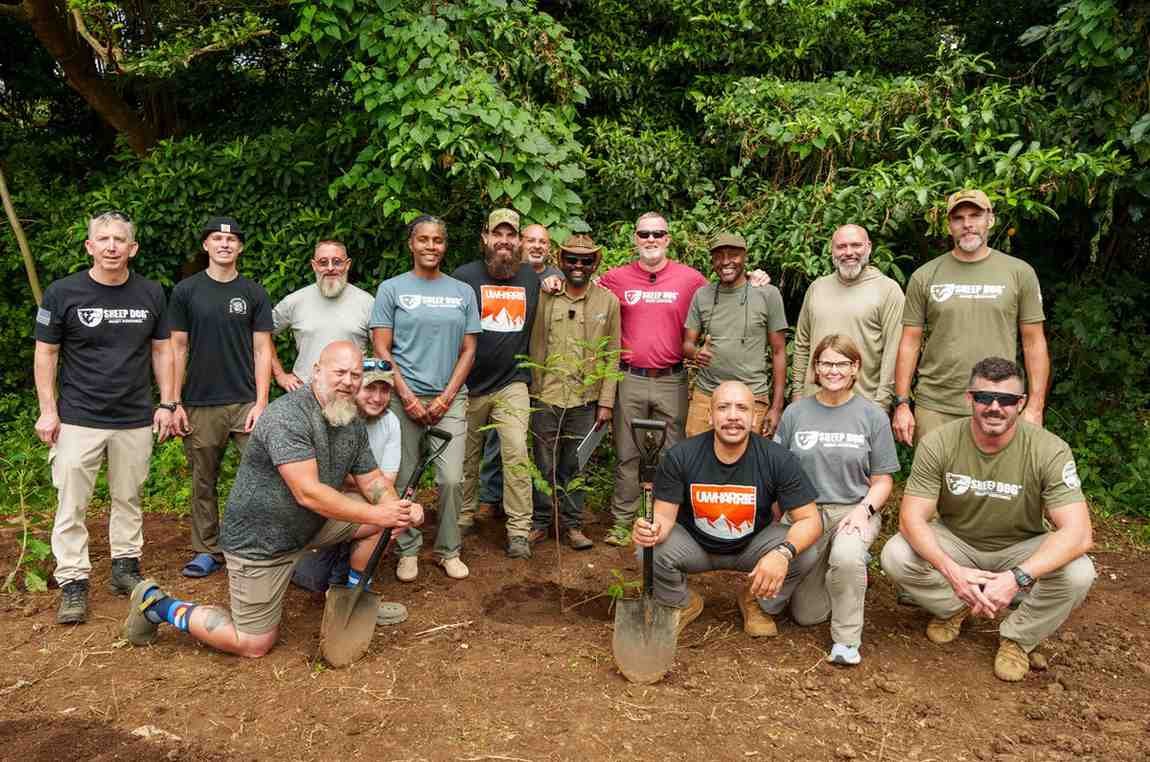
Planting a Legacy Tree at Kibo View Farm
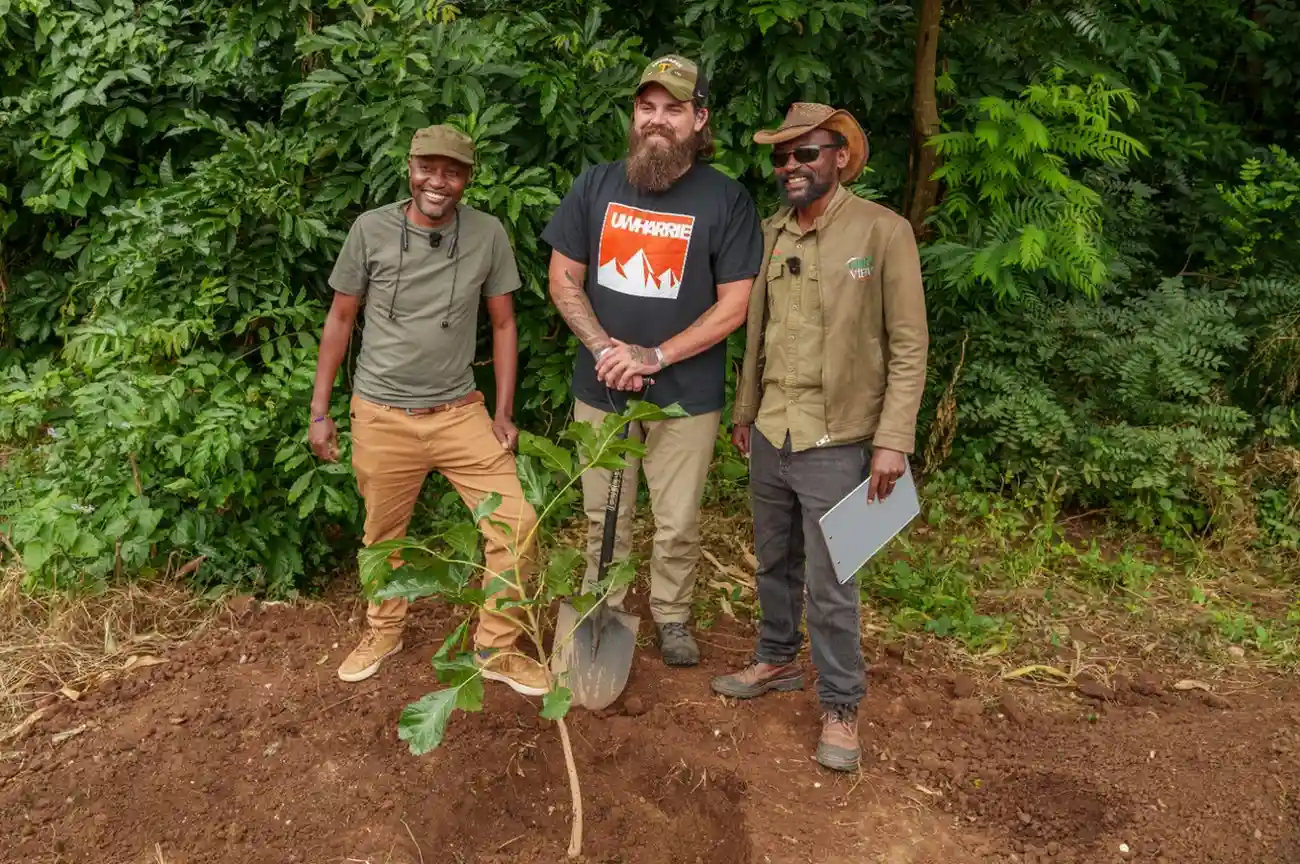
Your tree, marked with your name
The Legacy
Leave Something That Grows
Kilimanjaro's forests feed the rivers and streams that start on the mountain, and those water sources are under real pressure. Every tree planted at Kibo View Farm helps protect that water for the long run — it's a small, practical act, not just a gesture.
Once you're down off the mountain and back at the farm, we walk out to the planting field together. You plant one tree in your own name — our way of matching every climber with a tree — we put a small marker beside it, and we photograph the moment so you have it long after the blisters heal.
The tree stays here in Tanzania after you fly home, and it keeps growing. From time to time, we'll send you a photo of it — so you can see how much it's grown since the day you planted it.
- One tree planted in your name at Kibo View Farm
- Personalized tree marker
- Professional planting photograph
- Occasional growth photos sent to you after your trip
- Climb for a Cause certificate and celebration dinner
Start to Finish
Your Kilimanjaro Group Climb Experience
From the moment you arrive, our team will help you through the key stages of your climb.
Before the Climb
- Pre-climb briefing
- Route information
- Packing guidance
- Equipment advice
- Airport and local transfer arrangements
- Accommodation arrangements where included
On the Mountain
- Experienced mountain guides
- Porters and mountain crew
- Cook and camp support on camping routes
- Daily meals
- Drinking water according to the itinerary
- Proper rest periods
- Altitude awareness and monitoring
- Emergency procedures and mountain rescue arrangements
After the Summit
- Descent from the mountain
- Return transfer
- Kibo View Farm experience
- Legacy Tree planting
- Optional Tanzania safari
- Optional Zanzibar extension
Safety Comes First on Every Kilimanjaro Climb
Kilimanjaro is a serious high-altitude trek, and preparation matters. Our mountain team monitors your condition throughout the climb and pays close attention to how you are responding to altitude. We never encourage climbers to continue simply because they want to reach the summit — your safety comes first.
Certified Guides
KINAPA-registered mountain guides trained to recognise the early signs of altitude sickness, not just to lead the trail.
Daily Health Checks
Pulse oximeter and symptom checks morning and evening from the mid-mountain camps onward.
Emergency Oxygen
Carried on every group climb, on every route, as standard mountain safety equipment.
First Aid Support
Trained crew and first-aid kits at each stop along the route, not just at the trailhead.
A Clear Response Plan
If a climber becomes unwell, the team follows a defined descent protocol — no negotiation, no summit worth a life.
Mountain Rescue Arrangements
Direct communication between the mountain team and our office, with rescue arrangements in place before you set foot on the trail.
"If your guide tells you to turn around, that's the climb working — not failing."
Route Selection
Choose the Best Kilimanjaro Route for You
There is no single route that is best for everyone. The right route depends on your time, fitness, trekking experience and the type of mountain experience you want — scenic and gradual, steep and adventurous, hut-based and classic, or quiet and remote.
Lemosho Route
One of our favourite choices for first-time climbers and travellers who have enough time for a longer climb. The route approaches Kilimanjaro from the west and moves through several different landscapes before joining the southern trail towards the summit, giving your body more time to adjust to altitude along the way.
- Beautiful and varied scenery
- Good acclimatisation profile
- Excellent choice for first-time climbers
Machame Route
One of the most popular ways to climb Kilimanjaro. Known for its beautiful scenery and varied terrain, Machame offers a rewarding, active trekking experience with a steeper profile than Lemosho, while still giving good time to adjust to altitude.
- Beautiful mountain scenery
- Challenging but rewarding
- Popular with international trekkers
Marangu Route
The only main Kilimanjaro route that uses mountain huts instead of tents. It follows a well-established trail through rainforest, moorland and alpine desert before reaching the summit — a good option for travellers who prefer sleeping in a bed rather than camping.
- Mountain hut accommodation
- Straightforward trail structure
- No camping equipment required
Rongai Route
Approaches Kilimanjaro from the northern side of the mountain near the Kenyan border. A good choice for travellers looking for a different perspective of Kilimanjaro and a quieter trekking experience — we run it during the May shoulder month, while the drier northern side is more reliable than the still-settling southern trails.
- Different scenery from the southern routes
- Generally quieter trail experience
- Great choice for travellers wanting something different
| Route | Days | Sleeping | Best For |
|---|---|---|---|
| LemoshoRecommended | 7–8 days | Camping | Best overall experience and acclimatisation |
| Machame | 6–7 days | Camping | Scenic and adventurous trekking |
| Marangu | 6 days | Mountain huts | Travellers who prefer mountain huts |
| Rongai | 7 days | Camping | A quieter northern approach (May only) |
Still Deciding?
Which Kilimanjaro Group Climb Should I Choose?
If this is your first Kilimanjaro climb and your schedule allows it, we generally recommend choosing an itinerary with enough time for acclimatisation rather than simply choosing the shortest option.
Not sure? Tell us your travel dates, fitness level and previous trekking experience and we'll help you choose.
Kilimanjaro Group Departures
2027 Group Climb Dates – Tick a Route, Then Pick a Month
Tick the routes you're interested in, or jump straight to a month from the dropdown, to see every guaranteed departure date running.
Every route departs twice a week, on Monday and Thursday, all month long.
Prices are per person sharing, based on 2+ trekkers, and include your nights at Kibo View Farm Lodge and the Legacy Tree planting — see our Kilimanjaro climbing cost guide for how these compare across routes and operators. A 30% deposit secures your spot; the balance is due on arrival in Tanzania. Solo travellers welcome — ask about the single supplement.
Timing Your Trip
Best Time to Join a Kilimanjaro Group Climb in 2027
Kilimanjaro can be climbed throughout much of the year, but some months are more popular because of generally better trekking conditions.
A good period for travellers looking for a Kilimanjaro climb during the first part of the year, before the long rains set in.
One of the most popular periods for climbing Kilimanjaro, especially during the drier months — and the window with the most group departures running.
Christmas and New Year climbs can be particularly memorable for travellers who want to spend the holiday season in Tanzania.
Weather conditions can change on the mountain at any time, so choosing a good month is only one part of preparing for your climb. Your route, itinerary length, preparation and altitude management also matter — read our full best time to climb Kilimanjaro guide for the details.
The Fine Print
What's Included in Your Kilimanjaro Group Climb
Included
- Certified mountain guides & porters
- Emergency oxygen & daily health checks
- Kilimanjaro National Park fees & rescue levy
- Pre-climb briefing & packing guidance
- All meals on the mountain
- Camping tents (huts on Marangu route)
- Nights before & after at our own Kibo View Farm Lodge
- Farm-to-table breakfast, lunch & dinner
- Your Legacy Tree, marker, planting photograph & certificate
- Occasional photo updates of your tree's growth
- Airport transfers on arrival & departure
Not Included
- Travel insurance (with evacuation cover)
- International flights
- Tanzania visa fees
- Tips for guides, porters & chef
- Personal gear rental (sleeping bag, poles, jacket — see our Kilimanjaro packing list)
- Extra nights at the farm & personal expenses
Travelling Solo? You Don't Have to Climb Alone.
Our fixed Kilimanjaro group departures are built for solo travellers who want to share the mountain with a small international group instead of organizing one themselves.
- No need to organize your own group
- Meet climbers from around the world
- Small-group atmosphere
- Fixed, guaranteed dates
- Shared experience from mountain to farm
Extend Your Trip
Continue Your Tanzania Adventure
Many climbers add a safari or a few days on Zanzibar after their summit. Talk to us and we'll build it into your itinerary.
Common Questions
Kilimanjaro Group Climbs 2027: What to Know Before You Book
What is a Kilimanjaro group departure, and how is it different from a private climb?
Are the departure dates really guaranteed, even for solo travellers?
Which route should I choose for a Kilimanjaro group climb?
Do I need previous trekking or mountaineering experience?
How fit do I need to be to climb Kilimanjaro?
What happens if I get altitude sickness on the mountain?
Can I rent trekking equipment in Tanzania instead of bringing my own?
What's included in the Kibo View Farm Lodge stay?
What is the Legacy Tree, and how does the planting work?
How much does a Kilimanjaro group departure cost, and what's the deposit?
When is the best time to join a fixed Kilimanjaro group departure?
Don't See Your 2027 Kilimanjaro Group Climb Dates?
Send us your preferred travel window and we'll let you know about opening a new group departure, or put together a private climb built around your schedule.

We usually reply within 24 hours