The Great Wildebeest Migration: Best Time to See It in Tanzania (2026/2027 Guide)
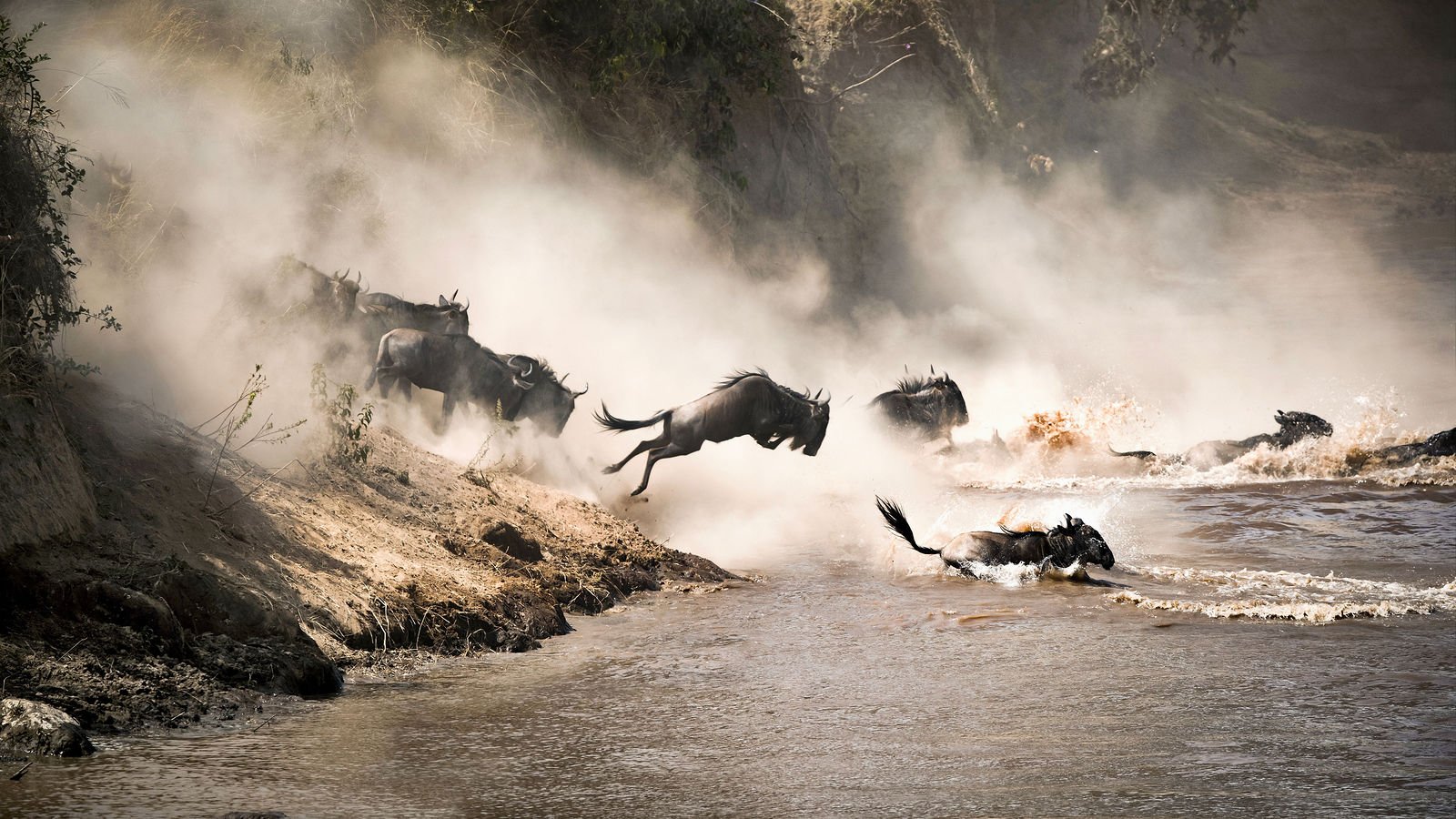
The Great Wildebeest Migration is the largest overland movement of animals on Earth. Every year, more than two million wildebeest, zebra, and gazelle complete a continuous clockwise circuit through the Serengeti-Mara ecosystem — crossing crocodile-filled rivers, sprinting past lion ambushes, and returning south to calving grounds before the cycle begins again. There is nothing quite like it anywhere else on the planet, and witnessing any part of it firsthand — whether the dramatic Mara River crossings of the northern Serengeti or the first wobbling steps of a newborn calf near Ndutu — remains one of the most requested wildlife experiences in Africa.
The most common question surrounding the migration is simple: when is the best time to see it? The honest answer is that the migration never stops. It is a 365-day-a-year phenomenon, and there are meaningful wildlife experiences available in every month. What changes month to month is the nature of the spectacle and the location of the herds. The right time to visit depends entirely on which chapter of the story a traveler most wants to see.
For itinerary options built specifically around the migration, see Nyange Adventures' wildebeest migration safari packages. To understand how the timing of a migration safari interacts with budget and park fees, the Tanzania safari cost guide covers pricing by season in full detail. For help combining a migration safari with a Kilimanjaro climb or a Zanzibar beach stay, the best time to visit Tanzania guide is a useful companion to this one.
Quick answer: the two windows that deliver the most concentrated and dramatic migration experiences are late January through February (calving season near Ndutu and the southern Serengeti — intense predator action, over 8,000 calves born per day at peak) and July through September (the famous Mara River crossings in the northern Serengeti — the single most-requested safari sighting in East Africa). Both are outstanding. They are simply different chapters of the same story.
Understanding the Migration Route: A Year-Round Overview
The Great Wildebeest Migration follows a roughly clockwise loop through the Serengeti-Mara ecosystem, driven not by instinct for instinct's sake but by rainfall and the growth of fresh grass. The herds move toward new grazing. They are not migrating because of the month — they are migrating because of where the rain fell last. This is the most important thing to understand about planning a migration safari: the animals follow the weather, not the calendar, and the exact timing of their movements shifts from year to year accordingly.
That said, the long-run pattern is consistent enough to plan around with reasonable confidence. The broad annual loop looks like this:
- Southern Serengeti and Ndutu (December–March): The herds spread across the short-grass plains of the southern Serengeti and the Ndutu area within the Ngorongoro Conservation Area, where nutrient-rich volcanic soils produce the grass the herds need for calving. Births peak in late January and February.
- Central Serengeti and westward (March–May): As the long rains arrive and the southern plains become over-grazed, the herds begin moving north and west through the central Serengeti toward the western corridor and the Grumeti River.
- Western corridor and Grumeti River (May–June): The herds mass in the western Serengeti. The Grumeti River, shallower and less famous than the Mara, provides the first significant river-crossing spectacle of the year.
- Northern Serengeti and Mara River (July–October): The herds push north through the Lobo area toward the Kenyan border. The Mara River crossings — the most iconic, most photographed, and most unpredictable event in the migration calendar — take place here, peaking in August and September.
- Return south (November–December): With the short rains greening the southern plains, the herds begin drifting south again, completing the loop before calving season restarts.
No crossing is guaranteed. River crossings are the most unpredictable element of the migration. The wildebeest may gather on a riverbank for days before committing to the water, and the timing of any individual crossing is impossible to predict with accuracy. Building flexibility into the itinerary — extra nights in the northern Serengeti, or a mobile camp that repositions with the herds — significantly improves the chances of witnessing one.
The Two Best Times to See the Wildebeest Migration
While the migration offers something in every month, two windows consistently rank as the highlights of the migration calendar and represent the majority of itineraries booked through Nyange Adventures.
- Late January through February
- Location: Ndutu area and southern Serengeti
- Over 8,000 calves born per day at peak
- Intense lion, cheetah and hyena predator action
- Quieter and less expensive than the July–September peak
- Generally shorter drives, good for families with children
- July through September (peaks August–September)
- Location: northern Serengeti (Kogatende / Lamai)
- The most dramatic and most requested safari sighting
- Herds mass on the riverbank, then commit in one chaotic charge
- Enormous Nile crocodiles patrol the crossing points
- Book lodges 9–12 months ahead; availability is very limited
For travelers unable to choose between the two: the river crossings are more spectacular in the cinematic sense — nothing in East African wildlife quite matches the chaos and scale of a large Mara crossing. The calving season, however, tends to stay with people longer. Watching a wildebeest calf stand for the first time within minutes of birth, with hyenas circling at the edge of the frame, is one of the most emotionally affecting wildlife experiences the Serengeti offers.
Share the travel period and priorities for a specific itinerary recommendation.
Month-by-Month: Where Are the Wildebeest?
The table below maps the migration's typical location and the main wildlife highlight for each month of the year. These are long-run averages — year-to-year variation, particularly driven by early or late rains, can shift the timing by two to four weeks in either direction.
| Month | Location | Main Highlight | Season |
|---|---|---|---|
| January | Southern Serengeti & Ndutu plains | Calving begins; up to 8,000 calves born per day by mid-month. Predators highly active. | Shoulder |
| February | Ndutu / southern Serengeti | Calving at peak. The best month for predator-prey interaction in the entire migration calendar. | Shoulder |
| March | Central Serengeti; herds begin moving north | Long rains begin. Herds disperse as southern plains become over-grazed. Green, dramatic landscapes. | Low |
| April | Central Serengeti / Seronera area | Heavy rains. Herds spread widely, harder to track. Excellent value; very few other vehicles. | Low |
| May | Western Serengeti / Grumeti corridor | Rains ease mid-month. Herds mass in the western corridor. Grumeti River crossings begin. | Low |
| June | Western & central-northern Serengeti | Dry season opens. Herds moving north, Grumeti crossings continue. Excellent value before peak rates kick in. | High |
| July | Northern Serengeti (Lobo / Kogatende) | First Mara River crossings typically begin. The most requested month of the migration calendar. | High |
| August | Northern Serengeti & Masai Mara (Kenya) | Crossings at their peak. The busiest and most dramatic month of the entire migration year. | High |
| September | Northern Serengeti / Masai Mara | Crossings continue. Crowds thin slightly from August. A favourite month for wildlife photographers. | High |
| October | Northern Serengeti; herds begin drifting south | Last crossing opportunities. Short rains typically arrive late in the month. | Shoulder |
| November | Eastern & central Serengeti, heading south | Short rains green the plains. Herds move quietly and quickly south. Landscapes vivid, rates drop. | Shoulder |
| December | Southern Serengeti; some herds reach Ndutu | Herds returning to calving grounds. Festive-season lodge rates are high despite being a shoulder month. | Shoulder |
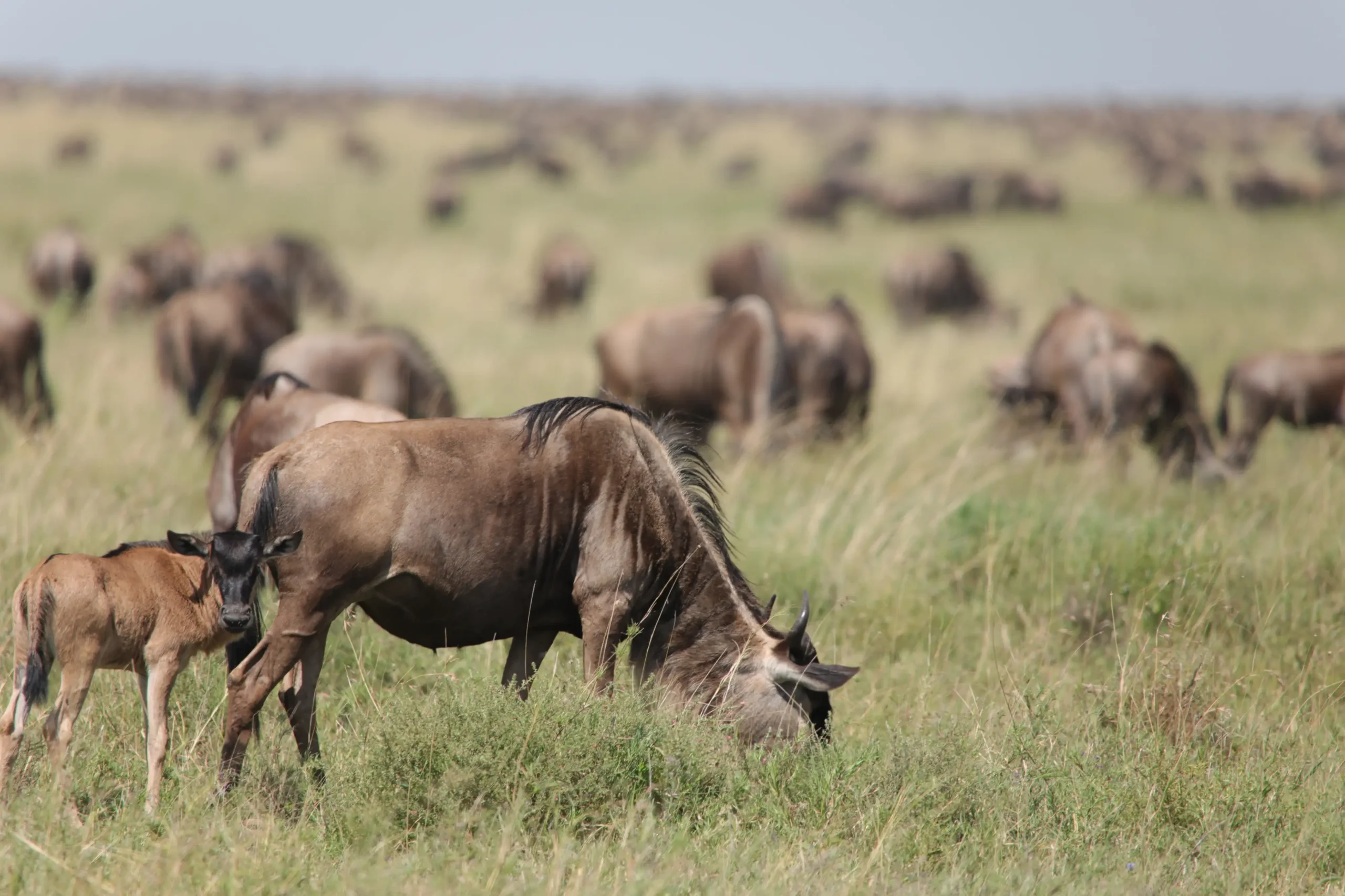
The calving season near Ndutu produces over 300,000 new wildebeest in a matter of weeks — and draws every major predator in the southern Serengeti to within striking distance.
The Mara River Crossings: What to Expect
The Mara River crossings are the centrepiece of the wildebeest migration's northern chapter, and the single event most travelers are picturing when they start researching a migration safari. Understanding how they work helps set realistic expectations and avoid the most common planning mistakes.
The crossings happen when a herd arrives at the Mara River's southern bank and, after a period of nervous gathering and false starts that can last hours or days, commits to the crossing en masse. The first animal into the water — often a zebra rather than a wildebeest — triggers a stampede that sends thousands of animals charging through crocodile-filled water and scrambling up steep far banks. The chaos, noise, and scale of a large crossing are genuinely extraordinary. They are also genuinely unpredictable. A group can wait at a crossing point for two or three days and see nothing, then have the herds arrive at a different point entirely.
A few practical realities worth understanding:
- The crossings are not scheduled. No operator can guarantee a crossing on any specific day, and any operator claiming otherwise should be treated with scepticism. The herds move on their own timeline.
- Location matters as much as timing. Staying in or near the northern Serengeti — at camps in the Kogatende or Lamai areas — dramatically reduces the distance to the main crossing points and gives access to multiple game drives per day near the river.
- The herds cross back and forth. It is a common misconception that the migration crosses into Kenya and stays there. The wildebeest move back and forth across the Mara River repeatedly, meaning the northern Serengeti and the Masai Mara both offer crossing opportunities from July onward.
- Flexibility is the most valuable asset. Itineraries with three or more nights in the northern Serengeti during July through September have the highest chance of witnessing at least one crossing.
The best northern Serengeti camps for the river crossings book out 9–12 months in advance. Dates in July, August and September fill first.
Where to See the Wildebeest Migration: Best Locations by Season
Each stage of the migration is best observed from a different part of the Serengeti ecosystem. Choosing accommodation based on where the herds are likely to be during a specific travel window is the most reliable way to position a migration safari correctly.
Ndutu & the Southern Serengeti (December–March)
The Ndutu area sits in the Ngorongoro Conservation Area at the southern edge of the Serengeti. Between December and March, when the herds are on the short-grass calving plains, this is consistently the most productive location in the entire migration ecosystem. Camps here are typically seasonal mobile operations that open for the calving window and close as the herds depart in March.
Western Corridor & the Grumeti (April–June)
As the herds move north and west through the central Serengeti and into the western corridor, the Grumeti River becomes the first major crossing obstacle. The Grumeti crossings are smaller in scale than the Mara, but the resident crocodile population is formidable, and this part of the Serengeti tends to see far fewer vehicles than the north in July and August. May and June in the western corridor represent genuinely excellent value for a migration experience outside peak-season crowd levels.
Northern Serengeti: Kogatende & Lamai (July–October)
The northern Serengeti — specifically the areas around Kogatende on the western bank of the Mara River and the Lamai Wedge on the eastern bank — is where the most famous river-crossing action takes place. Camps in this zone are in the highest demand of anywhere in the ecosystem from July through September and should be booked as far in advance as possible. This part of the Serengeti was among the last to be developed for tourism and still has a wilderness character that the more central areas of the park lack.
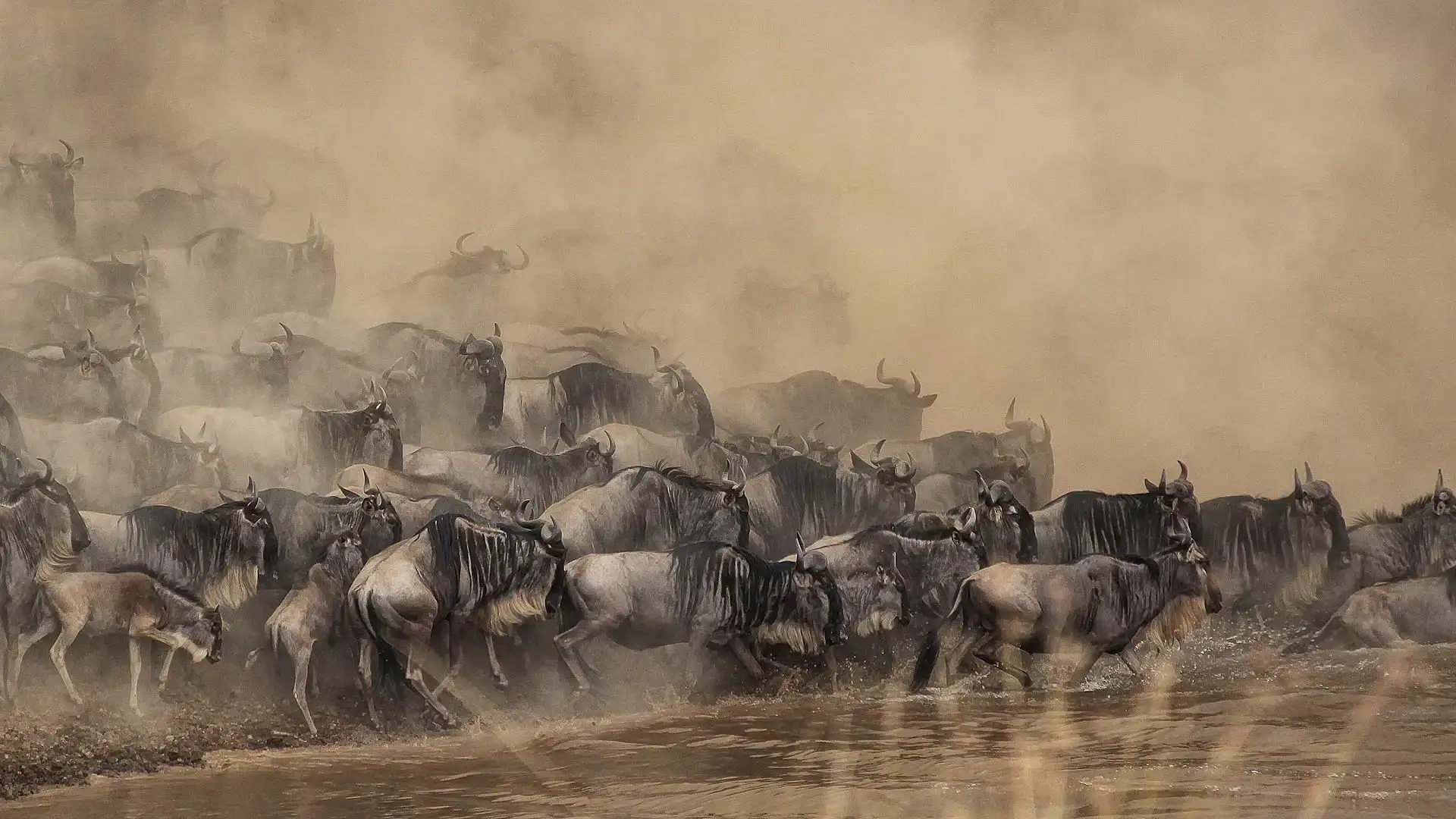
The Mara River at Kogatende in the northern Serengeti — the primary crossing zone during the July–September peak of the wildebeest migration.
The Wildebeest Migration and the Green Season
Tanzania's green season — broadly March through May — coincides with the migration's westward push through the central Serengeti, and it is consistently underestimated as a time to travel. Lodge rates drop significantly, vehicle numbers at sightings fall dramatically, and the Serengeti's landscape turns from dry gold to a vivid green that produces some of the best photographic light of the entire year.
The herds during this period are more dispersed and harder to track than in the concentrated calving and crossing windows, but they are present in enormous numbers. A long column of wildebeest crossing an open stretch of the western Serengeti in late May, with thunderstorm light breaking through behind it, is a wildlife photograph that rarely requires competition for the angle.
Travellers specifically chasing the drama of a Mara River crossing should avoid March through May. Those open to a quieter but genuinely productive migration experience — particularly photographers and repeat safari visitors — often consider it one of the best-kept windows in the calendar.
Value window: late May and June sit in an often-overlooked sweet spot. The long rains are easing off, the herds are moving toward the northern Serengeti, Grumeti crossings are underway, and accommodation rates have not yet reached their July–September peak. For travelers with some flexibility on dates, this window offers meaningful savings with only a marginal reduction in migration activity.
Tanzania vs. Kenya: Which Side of the Border Is Better?
The migration crosses between Tanzania's Serengeti and Kenya's Masai Mara, and both countries lay strong claim to offering the definitive experience. The honest comparison:
Tanzania's Serengeti holds the herds for approximately nine months of the year across its full annual cycle. The calving season, the Grumeti crossings, and the early build-up to the Mara crossings all take place entirely on the Tanzanian side. The northern Serengeti at Kogatende offers front-row access to the same Mara River crossings visible from the Kenyan side — often with fewer vehicles than the Masai Mara. For the full migration story, Tanzania is the larger and more complete canvas.
Kenya's Masai Mara is smaller but has a high density of wildlife viewing infrastructure and road networks. In August and September, when the herds are fully in the north, the Mara offers excellent crossing sightings and some of the most established luxury camps in East Africa. A combined Tanzania-Kenya itinerary, crossing between the two countries either overland or by light aircraft, is a well-trodden route for travelers with more than two weeks available.
How Far in Advance to Book a Wildebeest Migration Safari
The booking lead time for a migration safari varies significantly by target window. For the peak river-crossing months of July through September, the best-positioned camps in the northern Serengeti are frequently sold out 9–12 months in advance, particularly for travel during August. For the calving season in January and February, 4–6 months ahead is generally sufficient for most camp options, though mobile camps that follow the herds book faster. Green-season travel in March through May can typically be arranged within 2–3 months without difficulty.
Nyange Adventures' migration safari packages are designed with positioning built in — nights allocated based on where the herds are most likely to be during each specific travel window, with extra nights near the Mara River in peak season to maximise crossing opportunity.
Share a rough travel window and the team will recommend the right circuit and camps.
Frequently Asked Questions
When is the best time to see the wildebeest migration in Tanzania?
There are two peak windows. Late January through February offers the calving season near Ndutu in the southern Serengeti — intense predator action and over 8,000 calves born per day at peak. July through September offers the Mara River crossings in the northern Serengeti — the most dramatic single spectacle in the migration calendar. August and September are the most active months for crossings.
Can the wildebeest migration be seen all year in Tanzania?
Yes. The migration is a continuous, year-round movement and there is no month when the herds are absent from the Serengeti ecosystem entirely. What changes month to month is the location of the herds and the nature of the highlight — calving, river crossings, or the quieter in-between stages as the herds move between areas.
When do the wildebeest cross the Mara River?
The Mara River crossings typically begin in July and continue through September, sometimes extending into early October. August is generally the peak month for crossing frequency and volume. Exact timing shifts year to year based on rainfall, and no crossing can be guaranteed on any specific day.
What is the calving season and when does it happen?
The calving season refers to the concentrated period of wildebeest births that takes place on the short-grass plains near Ndutu and the southern Serengeti each year. It typically peaks in late January and through February, when over 300,000 calves are born within a matter of weeks. The concentration of newborns draws lions, cheetahs, leopards, and hyenas into close proximity, producing intense predator-prey interactions.
Is Tanzania or Kenya better for the wildebeest migration?
Tanzania holds the herds for the larger portion of the year — roughly nine months of the annual cycle — covering the calving grounds, the Grumeti crossings, and the early stages of the Mara crossing season. Kenya's Masai Mara is excellent for the August and September peak of the river crossings and has well-established infrastructure. For the full migration story, Tanzania is the more complete experience.
How long should a wildebeest migration safari be?
A minimum of 7 days is generally recommended for a migration safari that includes meaningful time near the herds rather than just passing through the area. For the Mara River crossings specifically, 10–14 days allows for the flexibility of waiting out the herds — which may not cross on a predictable schedule — without feeling rushed.
Where is the best place to stay to see the Mara River crossings?
Camps in the northern Serengeti near Kogatende, on the western bank of the Mara River, and in the Lamai Wedge on the eastern bank are the best-positioned properties for witnessing crossings. Proximity to the river is critical — camps within a short drive of the main crossing points spend less time transferring and more time at the water's edge. These properties book out many months in advance for July through September.
Is the wildebeest migration worth seeing in the green season?
Yes, particularly for travelers who prioritise value, exclusivity, and photography over the specific drama of a Mara River crossing. March through May offers the herds in the central Serengeti and western corridor at a fraction of peak-season cost, with dramatically fewer vehicles. The Grumeti River crossings begin in May and can be spectacular in their own right, without the crowds of the northern Serengeti in August.
Start Planning Your Wildebeest Migration Safari Today
Speak directly with Praise Nyange and our senior safari and Kilimanjaro specialists. We listen carefully, ask the right questions, and design an itinerary that feels unmistakably yours.
No commitment required · Personalised response within 24 hours

Your Safari Specialist
Praise Nyange
Founder & Lead Safari Expert
A decade guiding private safaris across Tanzania's finest parks — every itinerary personally overseen.