

Rongai Route - Kilimanjaro Climbing
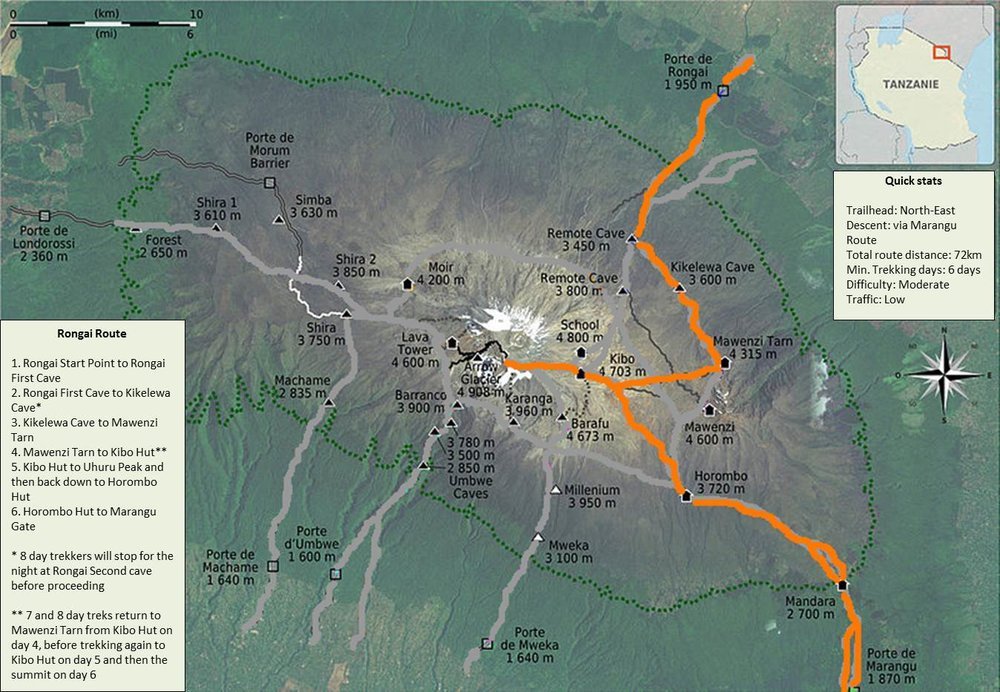
Rongai Route - The Quiet Northern Path to the Roof of Africa
The Rongai Route is the only trail on Kilimanjaro that approaches the mountain from the north, close to the border with Kenya. This unique starting point gives the route a completely different character from the more popular southern and western trails, offering climbers a quieter, more remote experience from the very first day.
Known for its gentle gradient, dry climate, and peaceful trails, the Rongai Route is often recommended for climbers who want a less crowded journey to the summit, or for those visiting during the rainy season when the southern routes can become muddy and difficult. The trail winds through pine forest, open moorland, and alpine desert before joining the main summit paths near the top, where it shares the final approach to Uhuru Peak with other routes.
While Rongai may lack some of the dramatic scenery found on routes like Lemosho or Machame, it more than makes up for this with its sense of solitude, steady walking pace, and consistently good weather conditions, even outside the main dry seasons. For climbers who value peace and quiet over crowded camps, Rongai is an excellent choice.
Why Climbers Choose the Rongai Route
The Rongai Route has built a loyal following among climbers and guides for several distinct reasons.
1. The Quietest Route on the Mountain
Because Rongai starts from a remote location on the northern side of Kilimanjaro, far from the busier access points, it consistently sees fewer climbers than almost any other route. For trekkers who want a peaceful, uncrowded experience and the feeling of having the mountain largely to themselves, Rongai offers exactly that, especially during the early days of the climb.
2. Reliable Dry Weather
The northern side of Kilimanjaro sits in a rain shadow, meaning it receives significantly less rainfall than the southern and western slopes. This makes Rongai an excellent choice during the rainy seasons of April, May, and November, when other routes can become muddy and difficult to navigate.
3. Gentle, Gradual Ascent
The Rongai Route follows a steady, moderate gradient for most of its length, without the steep scrambles found on routes like Machame. This makes it a comfortable option for climbers who prefer a more relaxed walking pace, while still offering enough altitude gain to support proper acclimatization over six or seven days.
4. A Different Side of Kilimanjaro
Approaching from the north gives climbers a unique perspective of the mountain that most visitors never see. The pine forests, drier landscapes, and views toward the Kenyan plains create a distinctly different atmosphere compared to the lush, crowded southern routes, making Rongai feel like a genuine off-the-beaten-path adventure.
What to Expect on the Rongai Route
As you progress along the Rongai Route, you will pass through several climate zones, each with its own character shaped by the drier northern conditions.
1. Pine Forest Zone
The trek begins in pine forest rather than the dense rainforest found on southern routes. This drier woodland is often quieter, with fewer animals and less humidity, creating a calm and peaceful start to the climb. The trail here is generally easy underfoot.
2. Moorland Zone
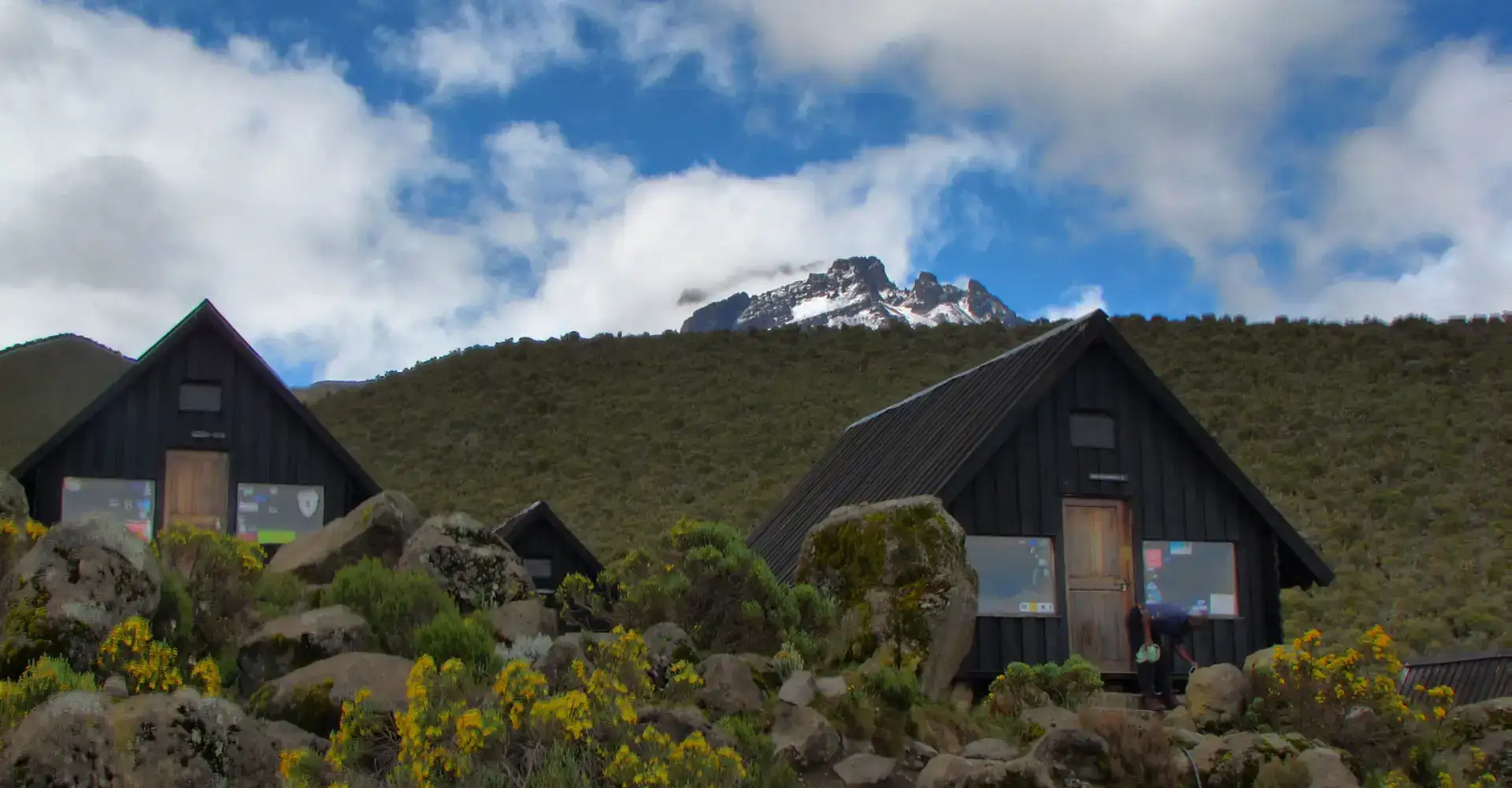
As the forest thins out, the trail enters open moorland, with heather, wildflowers, and increasingly wide views across the northern plains toward Kenya. This zone offers a sense of openness and space that is less common on the busier southern trails.
3. Alpine Desert Zone
Continuing upward, the landscape becomes rockier and more exposed as you enter the alpine desert zone. Vegetation becomes sparse, and temperatures swing sharply between warm days and cold nights, so layered clothing is essential as you approach the higher camps.
4. Joining the Summit Paths
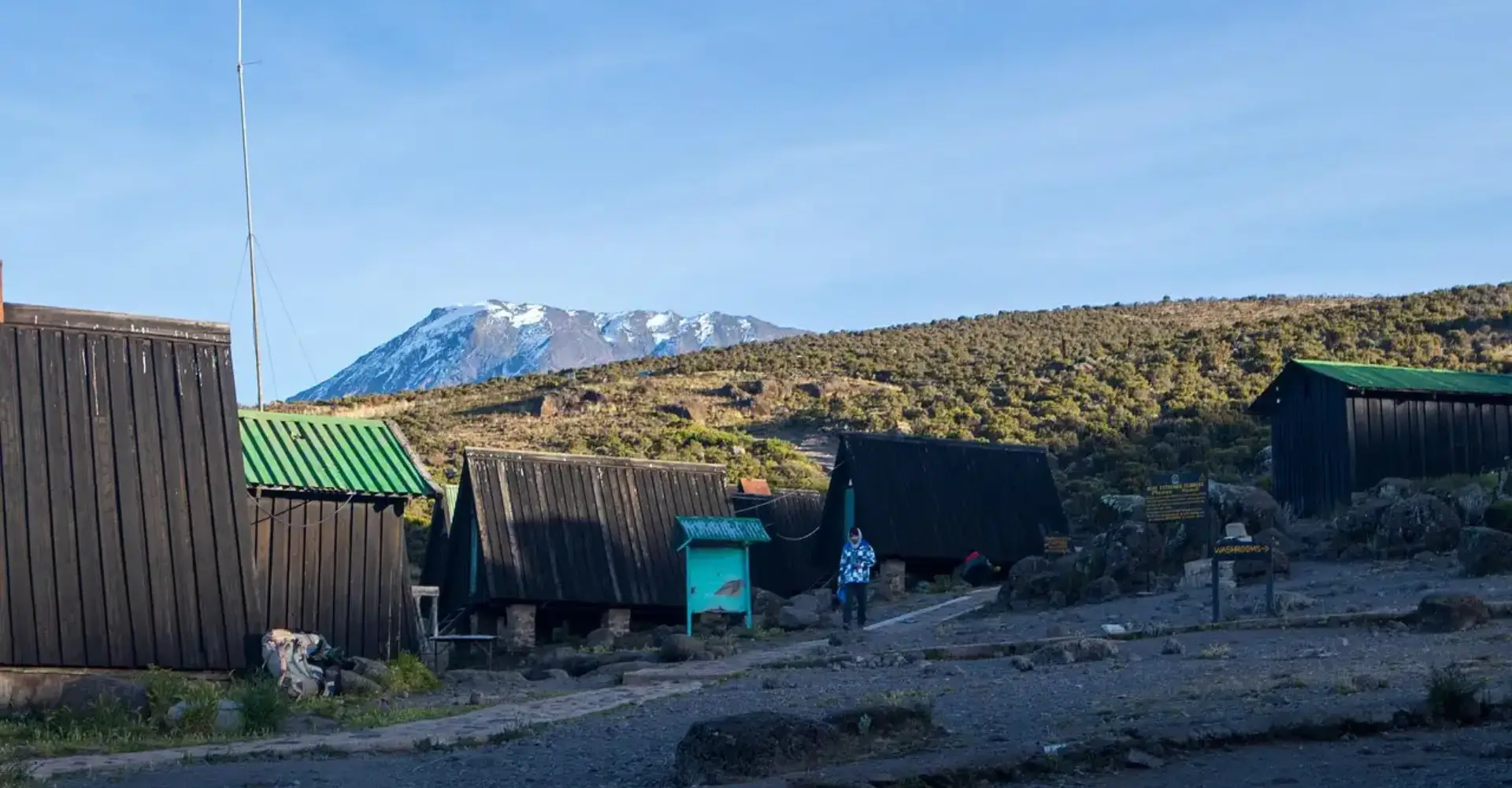
Near the top, the Rongai Route joins the main network of paths used by other routes for the final approach to the summit. This is where the trail becomes busier, as climbers from different directions converge for the final push toward Uhuru Peak.
5. Arctic Zone and Summit Push
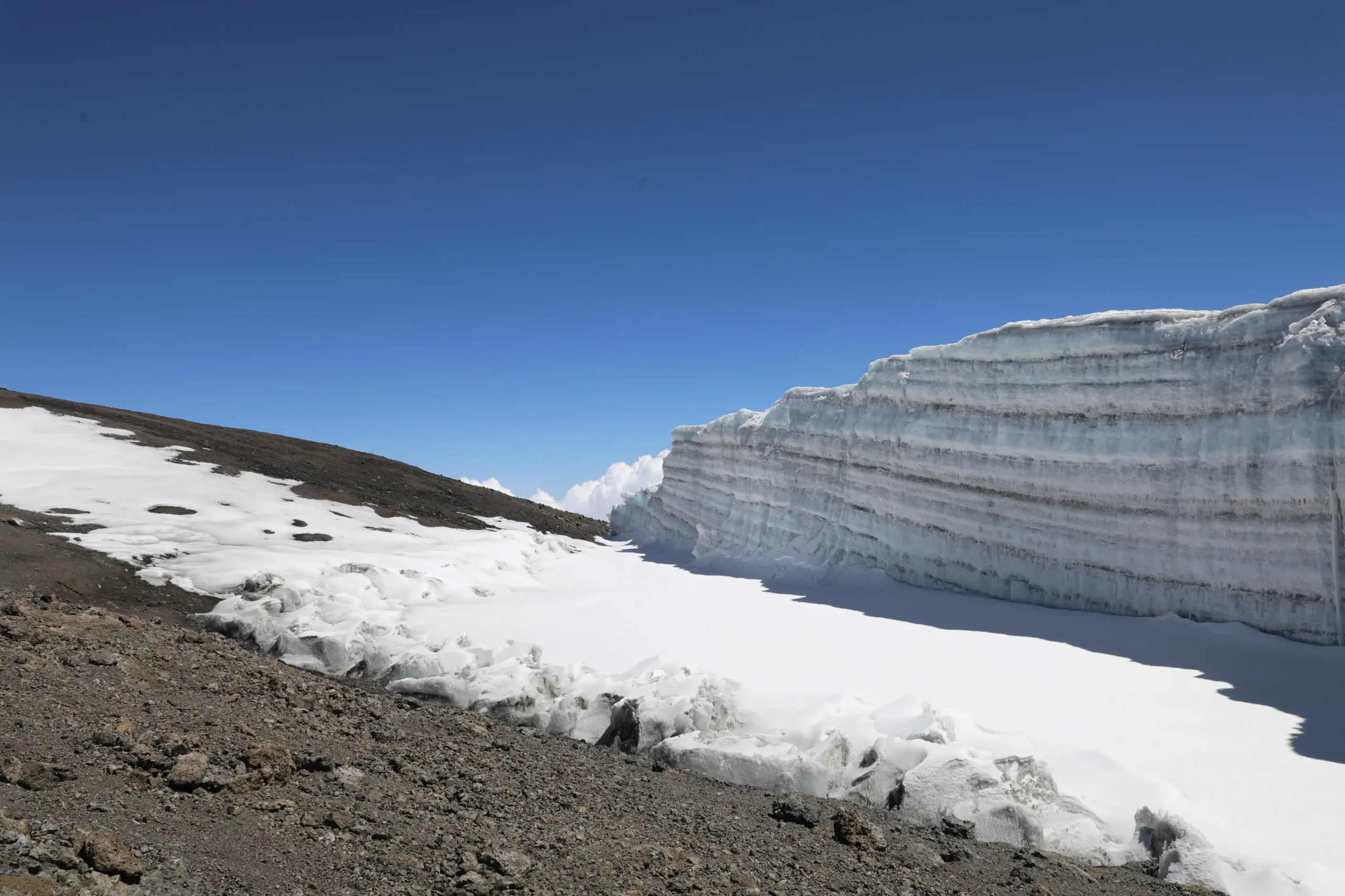
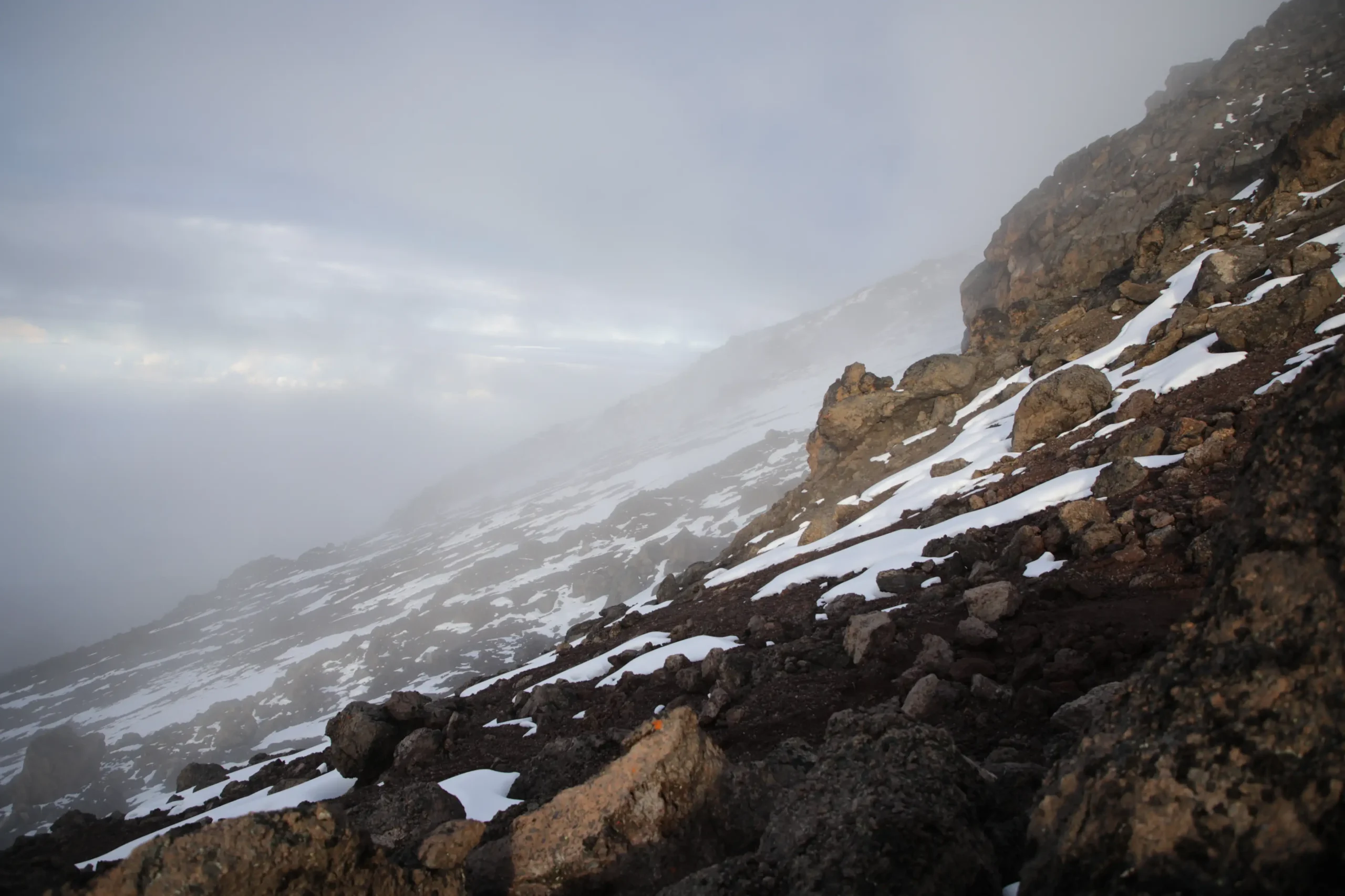
In the arctic zone, snow, ice, and thin air define the final stretch of the climb. The summit push typically begins in the early hours of the morning, allowing climbers to reach Uhuru Peak around sunrise. This is the most physically demanding part of the journey, regardless of which route was used to get there.
Best Time to Climb the Rongai Route
Kilimanjaro can be climbed throughout the year, but the Rongai Route has some unique advantages when it comes to timing.
1. Dry Season (Late June to October)
This period offers excellent conditions on the Rongai Route, with dry trails and clear skies. Combined with the route’s already quiet nature, this is a wonderful time for climbers seeking both good weather and solitude.
2. Dry Season (Late December to March)
This second dry window also provides stable weather and good visibility, making it another strong choice for climbers planning their Rongai Route ascent.
3. Rainy Season (April, May and November)
While other routes can become difficult during these months, Rongai’s position in Kilimanjaro’s rain shadow means it often receives noticeably less rainfall. This makes it one of the best route choices for climbers who need to travel during the wetter months.
Available Rongai Route Packages
Below you will find our current Rongai Route packages, including detailed itineraries, pricing, and what is included in each option. Choose the package that best suits your schedule, budget, and level of experience, and our team will be happy to help you prepare for this unforgettable journey to the roof of Africa.
7-Day Kilimanjaro Trekking – Umbwe Route
6-Day Kilimanjaro Trekking – Umbwe Route
6-Day Kilimanjaro Trekking – Rongai Route
7-Day Kilimanjaro Trekking – Rongai Route
Frequently Asked Questions
Everything you need to know about climbing Kilimanjaro via the Rongai Route with Nyange Adventures.The Rongai Route is usually done over 6 or 7 days. We recommend the 7-day option, as the extra day improves acclimatization and increases your chances of reaching the summit comfortably.
Rongai is the only route on Kilimanjaro that approaches the mountain from the north, near the Kenyan border. This gives it a quieter, more remote feel compared to the busier southern and western routes.
Yes, Rongai consistently sees fewer climbers than almost any other route, especially during the first few days. For trekkers who want a peaceful, uncrowded experience, this is one of the best choices on the mountain.
Yes. The northern side of Kilimanjaro sits in a rain shadow, so it receives noticeably less rainfall than the southern routes. This makes Rongai one of the best options during the wetter months of April, May, and November.
Yes. Rongai follows a gentle, gradual gradient without steep scrambles, making it a comfortable option for climbers who prefer a relaxed walking pace. The 7-day itinerary also gives the body extra time to adjust to the altitude.
The Rongai Route begins on the northern side of Kilimanjaro, near the Kenyan border. Climbers descend via Marangu Gate or Mweka Gate, depending on the chosen itinerary.
The Rongai Route has a good summit success rate, especially over 7 days. Its gradual ascent profile helps the body adjust to the altitude, which is the main reason climbers succeed or fail on the mountain.
You will pass through pine forest, moorland, alpine desert, and the arctic zone near the summit. Each zone has its own scenery, temperature, and vegetation, making the climb feel like travelling through several different worlds.
The best months are late June to October and late December to March, when the weather is dry and skies are clearer. Thanks to its position in Kilimanjaro's rain shadow, Rongai also remains a good option during the rainy months of April, May, and November.
Our Rongai Route packages typically include park fees and permits, professional guides and porters, all meals during the trek, camping equipment, transport to and from the gate, and drinking water. Exact inclusions vary by package, so check each option for full details.
Ready to climb the Rongai Route? Our experienced team is here to help you plan every detail of your Kilimanjaro adventure — from the right package to the right preparation.
Begin Planning Your Rongai Route Climb
Climbing Kilimanjaro is a once-in-a-lifetime achievement, and the right preparation makes all the difference. Let Nyange Adventures guide you every step of the way. Speak with Praise Nyange and our Kilimanjaro climbing specialists — we will listen to your goals and design an itinerary that gives you the best chance of standing on Uhuru Peak.
No commitment required · Personalised response within 24 hours

Your Climbing Specialist
Praise Nyange
Founder & Lead Safari Expert
A decade guiding climbers up Kilimanjaro's finest routes — every itinerary personally overseen.
Nyange Adventures Safari Reviews
Posted on Tripadvisor
 Catriona S
Verified
10/10 Kilimanjaro Trip We had the most amazing Kilimanjaro climb with Nyange Adventures and Equatours. We took the 7 day Machame route and our AMAZING guide Amnaay and team were just the best! We submitted on 7th October 2025 and loved every second! The team were amazing and every tiny detail was catered for, our safety was too priority, and of course having fun along the way! Would recommend them completely and will definitely book future African adventures with them too! Thank you so much, Catriona, Scotland UK.Posted on Tripadvisor Thomas F
Verified
5 Stars + rating for the extraordinary Nyange Adventures Climb Team! 5 Stars + rating for the extraordinary Nyange Adventures Climb Team! Our team of 7 climbers took the 6 day Marangu route. The climb team leaders and assistant guides (Victor, Mo and Navia) worked well as a group to provide an overview of our hike before starting and instilled in use the importance of positive vibes only (POV). Were attentive to the needs of climbers who had a slower (pole, pole). The initial backpack checks to double check all equipment that was needed was in your bag and whatever you were missing at that late stage they were about to rent to you.The daily oximeter readings and health checks and inspirational motivational talks mixed with humor always helped to PVO at the highest levels every day.Enough cannot be said about how delicious the food that was prepared by Steve, who called himself the stomach engineer. An animated gentleman, who was very funny, and you could tell he loved his job of preparing our food for the day. All the food came from Nyange’s Organic Kibo View Farm. We had a range of delicious soups (Motri, Maharagwe ya Nazi, Tomato, etc) along with other favorite Tanzanian dishes. We all enjoyed seeing Emmanuel, the waiter 3 times a day delivering coffee / tea to the huts to wake us up in the morning (and as we go higher on the mountain with no water source – bucket baths supplies), followed by breakfast and later in the day dinner, typically in the dining hall at the camp. Lunch was typically a box meal (but also delicious) since we were in route to other locations during the day. Emmanuel had such a big heart with great big smile, and we all enjoyed seeing him at least 3 times a day.The porters (16 of them and important to list all of their names: Venance, Raymond, Philip, Julius, Tayari, James, Josia, Rogers, Salimu, Pendaeli, Mashdi, Ramadhani, Wilfred, Shabani, Rajabu, and Ally) were the hidden heroes of the climb team, ranging in responsibilities of carrying the back packs for our team of climbers and they raced ahead to get our bags to the next location before we arrived, along with when we got to base camp at roughly 14,000 feet needed to return to the lower camp to retrieve more drinking water for our group. Also, transporting the portable toilet (Muba), to the three that were the summit porters (Muddy, Daubi and Mduma) which required early morning departures to the reach summit points with frequent checks to make sure all were doing well, with all of these activities making us all feel secure and well-supported in this challenging environment. We all had success with our climbs and no one in the group got sick. Thank you climb team.Nyange Adventures was started in 2011 and the Organic Kibo View Farms started in 2015, which is huge asset to the quality of food served pre and post hotel stays for climbs but also the source of food for climbs. A few suggestions that I hope will assist on the administrative side of Nyange in making the arrangements with future client groups. More transparency of the coordination between the staff member arranging the trip for climbers and the crew that carries out the climb. We never met the staff person on site that we spent 9 months coordinating and confirming arrangements with. The complexity of the living wage tip rubric was confusing but finally confirmed via staff in multiple messages, but the climbing crew had different numbers. It got sorted out in the end, but timing of renegotiation at this celebratory end of climb was not pleasant time. Simplifying these recommendations, since this confusion prevents clients from increasing tips beyond the minimum levels. Also, improving the upfront transparency for the mechanics for returning deposits (in keeping with the policies of Nyange Adventures), for climbers who cannot make it due unforeseen circumstances. We had 1 person that needed to cancel 6 months ahead of the climb and it was worked out in the end, but a time-consuming back and forth process that took several months to resolve. I feel so strongly about the extraordinary service of the Nyange Adventures Climb Team, my rating is a 5 stars + for this 25 person group, but lowered the overall rating to 4 due to the administrative hiccups that will hopefully be resolved for future clients. Thank you again for this amazing opportunity to be supported by your company for such an epic life changing event.Posted on Tripadvisor Tristen mPhenomenal climbing experience Incredible experience climbing Mt. Kilimanjaro. All of the porters and guides were amazing and far exceeded our expectations, caring for all 7 of us every step of the way. Would recommend going with Nyange Adventures over anyone else especially after completing the climb. Also, Victor, Mo, and Navia were fantastic; extremely sociable and made the experience so much fun.Posted on Tripadvisor
 Frances SFREAKING SO AWESOME BEST DAYS OF MY LIFE. This was actually such an amazing experience from start to finish. We came as a group of 6 22 year old college students and a teacher and had the best time climbing. Our guides were understanding, knowledgeable, and very personable. I felt heard and safe the whole time. The food and accommodations were excellent and the experience was truly catered to our specific group and our needs. Summit day was the best day I have had thus far and it was because of the team we had. Our porters were super kind and funny and despite carrying more than we could even imagine were fist bumping us on trail and giving us words of encouragement. Our guides were Victor, Mohamed, and Navia! They were beyond amazing. Overall great experience.Posted on Tripadvisor
 C RasquinhaNyange Adventures for trip of a lifetime to Tanzania Nyange Adventures managed our trip into Tanzania and developed the itinerary and set us up with an Amazing coordinator in Amina and a great guide in Richard Eberneezer. From start to finish, the accommodations and the attractions along this 8 day journey were magnificent. Strongly recommend Nyange Adventures and working with Amina and Richard.Posted on Tripadvisor
 jana r5 star company!!! Excellent service with the guides and porters from Nyange Adventures! Hands down, top notch company! Their motto is come as a client, leave as a friend- I can attest to that! We had an amazing time and all bases were covered- even the ones we didn’t know about! ⭐️⭐️⭐️⭐️⭐️Posted on Tripadvisor
 Regina OUnforgettable Safari Experience. Our safari with Nyange Adventures through Lake Manyara and Serengeti was incredible! We saw so many animals in their natural habitat, and the expertise of the guide made each moment more enriching.Posted on Tripadvisor
 HCAn incredible team and an unforgettable climb. The group tour I signed up for ended up being a solo trip due to last minute cancellations. However, this gave me great flexibility with the itinerary and a perfect opportunity to get to know the team. I felt safe, respected and taken care of as a female solo traveller. The whole trip felt seamless. Amnaay, the mountain guide, was instrumental to my successful summit - he was knowledgable and professional. The meals provided every day were freshly prepared and delicious. The team of porters amazed me every day with their physical abilities and joyful spirit. Bonding with the team was a highlight of the trip - not a day went by without someone bursting into a belly laugh! I also stayed at the Kibo View Farm before and after the climb, which was a little slice of heaven. I would highly recommend Nyange Adventures for their local expertise and fair treatment of porters.Posted on Tripadvisor
 CarlosA personal goal achieved thanks to the guidance and support received from the Nyange Adventures team. At age 73 I successfully completed the ascent of Mount Kilimanjaro, via the Lemosho route, a week ago today. Throughout the eight day trek and the final ascent to Uhuru Peak I was impressed by the guidance and support received at all times from the entire Nyange Adventures team. The guides, Mo and Colin, the cook, the waiter and the fantastic team of porters that accompanied me made my success possible, and I would therefore not hesitate to recommend Nyange Adventures to anyone considering the experience of climbing Mount Kilimanjaro.Posted on Tripadvisor
 Leticia LExcellent and exceptional experience! My experience couldn't be better and I couldn't recommend Nyange more! They are excellent and I'm super satisfied with everything.I booked my climbing to Kilimanjaro with them and everything was perfect from the starting communication to the very last second I was with them.I'm a woman solo traveler and I felt safe every single time.All the staff is very nice, helpful and attentive. They really make the phrase "come as a client, leave as a friend" come true, I'll miss everyone! Special thanks to my guide in Kilimanjaro: Amnaay (if you wanna go with him, I assure you'll have a fun and pleasant time! He knows a lot, is very encouraging and literally held me when I couldn't walk anymore. I don't know if I could reach the summit without him and all the other guys that came with me - the cooker, waiter and porters, everyone special, very professional and has their space in my heart).They arranged everything I needed: my commuting from the city center to the farm (their farm is amaaaaazing, beautiful and the room was super comfortable and clean and with a breathtaking view of Kilimanjaro. All the delicious food they make is local - with ingredients from the farm), even in my last night Amnaay asked them if they could cook Ugali for me, and they did!The owner, Praise, is also very caring and himself always make sure that everything is ok, always having nice conversations, asking if I need something, etc.I could be here writing a review of 50 pages only speaking good things about them. Highly recommend! It was for sure the best experience in my life and thanks for them!