

Tanzania is one of Africa's great safari destinations: the open plains of the Serengeti, the volcanic setting of the Ngorongoro Crater, the elephants and baobabs of Tarangire, and the forest and wetlands of Lake Manyara. Choosing a package takes more than picking a destination, though. The season, the length of the trip, the accommodation, the transport, the activities and the areas you want to explore all change what you get.
In our experience, the best Tanzania safari packages are not the most expensive ones or the ones that squeeze in the most parks. They are the ones that fit your interests, dates and budget, with a sensible route and enough time in each place. This guide walks through how we would help you choose one for 2027.
Start with your time and your route
How much time you have shapes everything else. A three-day safari is a rewarding introduction to Tanzania; our 3-Day Tarangire, Ngorongoro & Manyara Safari is a good example. With more time you can explore several parks at a more relaxed pace, and the hours spent driving between them take up a smaller share of the trip.
For a first safari, northern Tanzania is usually the practical choice, because several of the major parks can be combined in one itinerary. A typical route links Tarangire National Park, the Ngorongoro Conservation Area and Serengeti National Park, giving you very different landscapes without crossing the whole country. Short packages often focus on Tarangire and Ngorongoro; longer ones add the Serengeti.
If the Serengeti is on your list, give it enough time to be worthwhile rather than treating it as a quick stop between other parks. As a rough guide, three or four days suits a compact itinerary, while a week or more gives you room to breathe. A focused route almost always works better than a rushed one with constant transfers.
Choosing when to go in 2027
Tanzania has good wildlife viewing all year, but conditions vary by area and season. The long dry season, roughly June to October, is the most reliable time for a first safari: tracks are firm and animals gather around the remaining water. March to May is the green season, with lush landscapes and the lowest rates of the year, though rain can interrupt a game drive.
The Great Migration is a continuous loop rather than a single event, and it follows rainfall and grazing. From December to March the herds spread across the southern Serengeti and Ndutu, with calving concentrated in late January and February; our 5-Day Wildebeest Migration Calving in Ndutu is built around that window. From July to October they are usually in the northern Serengeti, the time of the Mara River crossings covered by our 7-Day Mara River Crossing Serengeti Migration. Exact timing shifts from year to year, so a migration safari needs some flexibility.
If you are planning around July to September 2027 or the Christmas and New Year period, book six to twelve months ahead, especially for camps in the northern Serengeti. Shoulder and green-season dates can usually be booked a few months out.
The parks to build a package around
Serengeti National Park
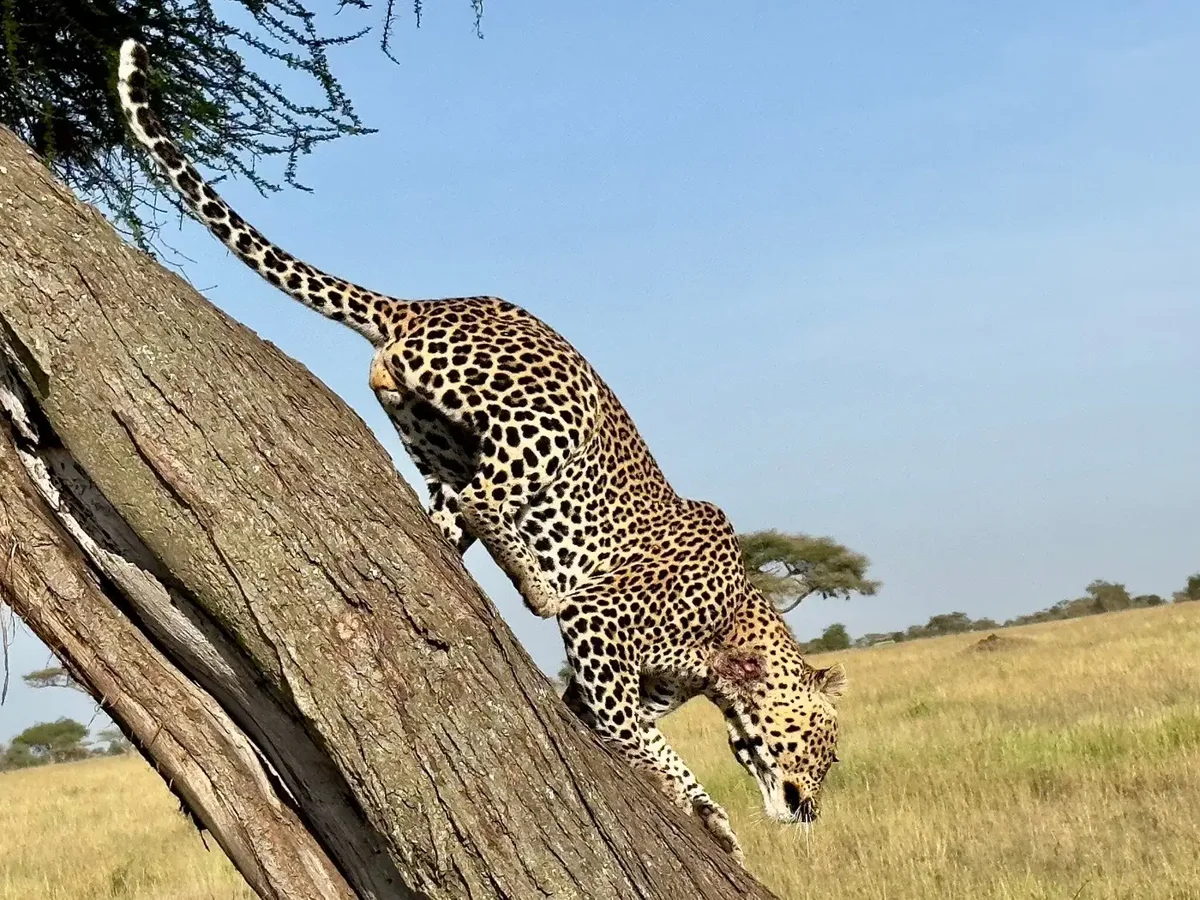
The Serengeti's grasslands support large numbers of grazing animals and the predators that follow them, and the park is closely tied to the Great Migration. On a Serengeti safari you may see lions, cheetahs, leopards, elephants, giraffes, zebras and wildebeest, among many other species. What you see changes with the area and the season, which is why local guidance on where to stay matters so much here.
Ngorongoro Crater
The Ngorongoro Crater is a vast volcanic caldera within the Ngorongoro Conservation Area, with grassland, wetland, forest and a high concentration of wildlife on its floor. Its enclosed setting makes it excellent for game viewing and photography, and it stays productive in every season. It pairs naturally with the Serengeti.
Tarangire National Park
Tarangire is a strong choice if you want elephants and distinctive scenery. Huge baobab trees stand across parts of the park, and in the drier months wildlife gathers around the remaining water sources.
Lake Manyara National Park
Lake Manyara National Park combines forest, open ground, wetlands and the lake itself. It is particularly good for birdlife, so it suits travellers who want to combine mammals with birdwatching.
Nyerere and Ruaha National Parks
Southern Tanzania offers a different kind of safari. Nyerere National Park covers a huge protected area where wildlife is less concentrated, and Ruaha National Park is known for rugged landscapes and varied wildlife. The northern circuit suits travellers who want the famous parks on a fairly compact route; the south appeals to those looking for larger wilderness areas. The southern parks feel the seasons more, so the dry months from June to October are close to essential there.
Adding Zanzibar
Many travellers finish with a few days on Zanzibar for its beaches, Stone Town and a slower pace after early game-drive starts. A short flight connects Arusha or the Serengeti with the island, so safari and beach fit easily into one trip, as on our 11-Day Classic Safari & Beach Holiday.
Budget, mid-range and luxury packages
Package prices vary widely. The main factors are accommodation, transport, length, group size, season, park fees and the services included. Accommodation ranges from campsites and permanent tented camps to lodges and high-end safari properties.
Budget
Budget packages suit travellers who would rather spend their money on time in the parks than on premium accommodation. Camping-based trips keep costs down and put you closer to your surroundings. Still check the vehicle, the guide, the food, the campsite facilities and the safety arrangements.
Mid-range
Mid-range safaris balance comfort and cost, with lodges and tented camps offering private rooms, comfortable beds, good meals and easy access to the parks. This level suits couples, friends and anyone who wants a comfortable trip without the highest-priced properties.
Luxury
Luxury packages focus on comfort, privacy, service and exceptional locations, with spacious tents or suites, private dining and premium facilities. Some use flights between parks, so you spend more time on game drives and less on long road transfers.
Private or group safari?
Group departures cost less because the vehicle and guide are shared between several travellers. Private safaris cost more but let you choose departure times, photography stops and how long each game drive lasts. Neither is automatically better; it depends on your budget, your travel style and how much you want to tailor the trip.
Families usually benefit from a private vehicle. Long drives tire children out, so a good family itinerary balances game drives with rest, uses child-friendly lodges and doesn't try to cover too many parks in a short time.
Photographers do best with longer stays in fewer areas, flexible game-drive schedules and guides who understand animal behaviour and positioning. Well-placed accommodation also helps, because less time on the road means more time with the wildlife.
What a good package should include
A good package spells out exactly what you are paying for. Before booking, check that it covers:
- Accommodation, with each lodge or camp named
- Transport, including the safari vehicle and any domestic flights
- Park and conservation fees
- Meals
- Game drives and guide services
- Airport transfers
Compare the whole package rather than the advertised starting price. A cheaper package may leave out park fees, airport transfers, meals or particular activities, and a slightly more expensive one can be better value if it includes more and uses better-placed accommodation. Be wary of vague descriptions or unusually low prices with no explanation of what is included.
The guide and vehicle matter as much as the lodges. A knowledgeable guide can explain animal behaviour, find wildlife that is easy to miss and tell you about the wider ecosystem, and the vehicle should be well maintained and equipped for the route.
Before you travel
Pack for changing conditions: comfortable clothing, suitable footwear, sun protection, insect repellent, binoculars and a camera. Mornings on the Ngorongoro Crater rim can be properly cold, even in the dry season. If your package includes domestic flights, luggage restrictions may apply, so check them before you pack.
Look into travel insurance, entry requirements and vaccination advice well before you leave. These can change, so confirm the current rules with official sources.
Frequently asked questions
Is northern or southern Tanzania better for a first safari?
For most first-time visitors, the northern circuit. Tarangire, the Ngorongoro Crater and the Serengeti can be combined in one itinerary by road. Southern parks such as Nyerere and Ruaha suit travellers who want larger wilderness areas and are best visited in the dry season.
When should I book a safari for 2027?
For July to September or the Christmas and New Year period, six to twelve months ahead is sensible, particularly for northern Serengeti camps. Other months are more forgiving and can often be booked a few months in advance.
Is a group safari or a private safari better value?
A group safari costs less per person because vehicle and guide costs are shared. A private safari costs more but gives you control over the pace and timings. Families and photographers often find the extra flexibility worth it.
To start planning, tell us roughly when you would like to travel, how many of you there are, the parks or experiences that interest you and the level of accommodation you have in mind. We will suggest a route that fits and send an itemised quote, so you can see exactly what is included.