


What the climb asks of you
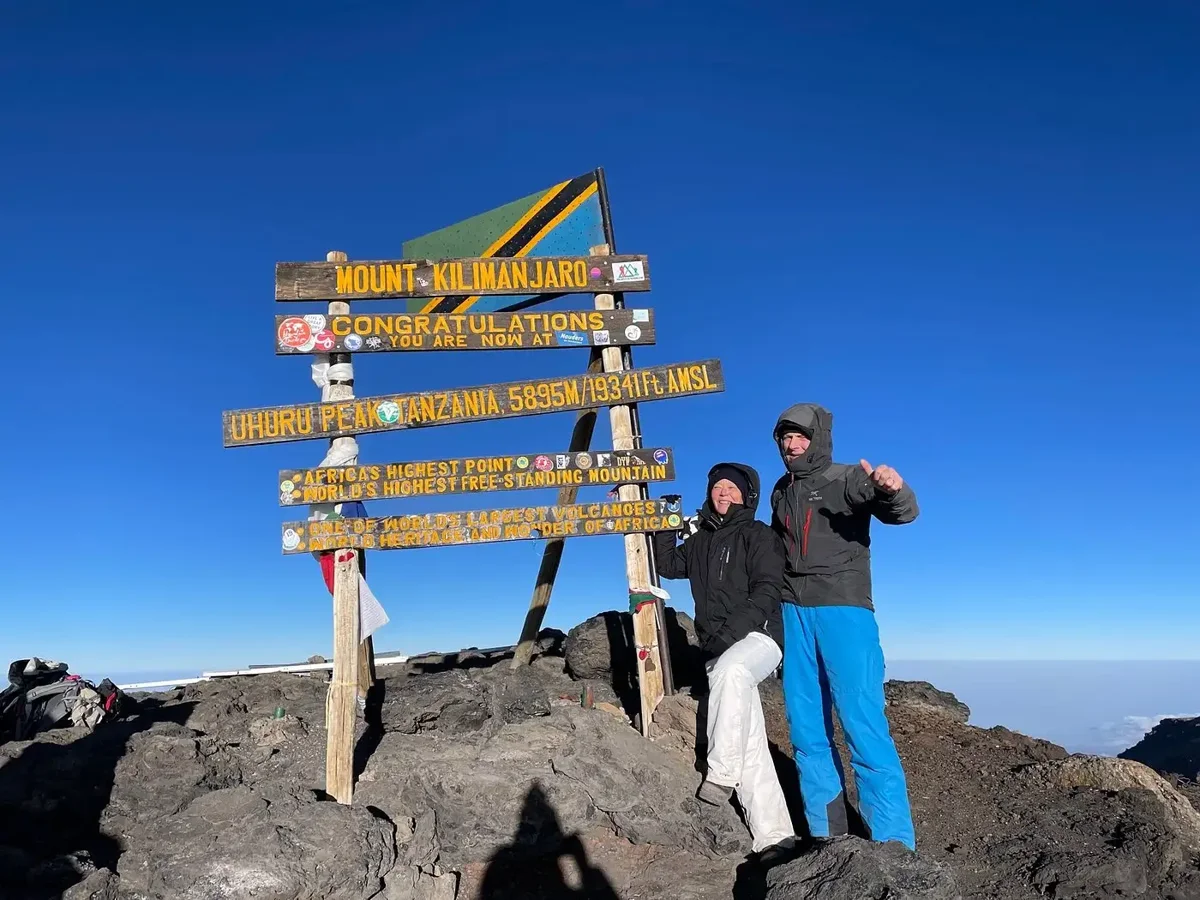
Kilimanjaro is a long walk, not a technical climb. You walk for five to nine days, most of them for several hours, on rough paths that climb and drop. Summit night is the hardest part: you leave high camp around midnight, climb to Uhuru Peak at 5,895 m and then walk a long way down the same day.
You don’t need to be an athlete. You need legs that can handle hours of uphill and downhill on consecutive days, and practice at being on your feet for a long time with a daypack. That is what this plan builds.
No training prepares your body for altitude. What helps most on the mountain is a longer route, a slow pace and plenty of water. Training makes the walking easier, so you have more energy left to cope with the altitude.
Before you start
- See your doctor first, especially if you have a heart or lung condition, high blood pressure, or haven’t exercised for a while.
- If you can walk for two hours at a steady pace and feel fine the next day, start at week 1.
- If two hours is hard today, walk three or four times a week for four weeks first, building up to 90 minutes. Then start week 1. That makes it a 16-week plan.
- If you already hike for four hours or more most weekends, start at week 5 and follow the last eight weeks.
- Start at least 12 weeks before you fly. If you have less time, start where you can, and keep the last two easy weeks.
How the plan works
Weeks 1–4: Build a base
Three or four short sessions a week and one longer weekend walk. The aim is to get used to regular exercise without picking up an injury.
Weeks 5–8: Add hills and weight
Longer walks with hills or stairs, in your climbing boots and carrying a daypack. By the end of this phase you walk on two days in a row.
Weeks 9–10: Your longest weeks
Back-to-back hikes of five to six hours with the daypack you’ll carry on the mountain. Treat one weekend as a dress rehearsal in full kit.
Weeks 11–12: Ease off
Cut the amount by about half in week 11 and more in week 12, so you arrive in Tanzania rested rather than tired. Keep walking, but drop the hard sessions.
Week by week
Cardio means brisk walking, cycling, swimming or a cross-trainer: anything that keeps you breathing hard but still able to talk. Strength sessions use the routine below.
| Week | During the week | Weekend | Daypack |
|---|---|---|---|
| 1 | 2 × 30-minute cardio · 2 × 20-minute strength | 1.5-hour walk | None |
| 2 | 2 × 35-minute cardio · 2 × 20-minute strength | 2-hour walk | None |
| 3 | 3 × 40-minute cardio, one with hills · 2 × 25-minute strength | 2.5-hour walk | 3 kg |
| 4 | 3 × 40-minute cardio, one with hills · 2 × 25-minute strength | 3-hour walk | 3 kg |
| 5 | 2 × 45-minute cardio · 1 × 45-minute hills or stairs · 2 × 30-minute strength | 3-hour hike with hills, in your boots | 5 kg |
| 6 | 2 × 45-minute cardio · 1 × 45-minute hills or stairs · 2 × 30-minute strength | 3.5-hour hike with hills | 5 kg |
| 7 | 2 × 50-minute cardio · 1 × 50-minute hills or stairs with your pack · 2 × 30-minute strength | 4-hour hike | 6 kg |
| 8 | 2 × 50-minute cardio · 1 × 50-minute hills or stairs with your pack · 2 × 30-minute strength | Two days in a row: 4 hours, then 2 hours | 6 kg |
| 9 | 2 × 50-minute cardio · 1 × 60-minute hills or stairs with your pack · 2 × 30-minute strength | Two days in a row: 5 hours, then 3 hours | 7–8 kg |
| 10 | 2 × 50-minute cardio · 1 × 60-minute hills or stairs with your pack · 2 × 30-minute strength | Dress rehearsal in full kit: 6 hours, then 4 hours | 7–8 kg |
| 11 | 2 × 40-minute easy cardio · 1 × 30-minute hills · 1 × 20-minute strength | 3-hour easy walk | 5 kg |
| 12 | 2 × 30-minute easy walks · gentle stretching | Rest before you travel | None |
The strength routine
Twice a week, about 20 to 30 minutes. It builds the legs and core you need for long climbs and, just as important, for the descents.
- Step-ups onto a bench or stair: 3 × 12 each leg
- Squats: 3 × 15
- Reverse lunges: 3 × 10 each leg
- Slow step-downs from a stair, for the descents: 3 × 10 each leg
- Calf raises: 3 × 20
- Glute bridges: 3 × 15
- Plank: 3 × 30–45 seconds
- Side plank: 2 × 20–30 seconds each side
When these feel easy, wear your daypack with a few books in it. Stretch your calves, hamstrings and hips after each session.
No hills where you live?
Use the stairs in a tall building or a stadium, a stair machine, or a treadmill on a steep incline. Walk down the stairs too. Your knees and thighs need practice for the descents, which many climbers find harder than the way up.
Train with your kit
- Wear your climbing boots on every long walk from week 5, so they are broken in before you fly.
- Carry the 30–40 litre daypack you’ll take on the mountain, with 3 litres of water, a rain jacket and warm layers.
- Practise with trekking poles if you plan to use them, especially on the way down.
- Drink regularly on long walks, so it becomes a habit before the climb.
- Do at least one long walk in cold or wet weather, in the layers you’ll wear on summit night.
Get ready for summit night
Summit night is slow, cold and dark. You walk uphill for hours by head torch, one small step at a time, and many climbers find it a test of the mind as much as the legs. On your dress-rehearsal weekend, start one walk before dawn and practise holding a slow, steady rhythm.
Get the printable plan
A PDF with the week-by-week plan to tick off, the strength routine and a checklist for your training hikes. Leave your name and email and the download opens straight away.
Frequently asked questions
How fit do I need to be to climb Kilimanjaro?
Fit enough to walk for five or six hours on two days in a row with a daypack, and feel ready to do it again. You don’t need to run or lift heavy weights. Most of the difficulty comes from the altitude, not the walking.
Can I train for Kilimanjaro in eight weeks?
Yes, if you already walk or hike regularly: start this plan at week 5. If you’re starting from very little exercise, eight weeks is tight. Do what you can, focus on long walks in your boots with your pack, and choose a longer route.
Does training help with altitude sickness?
Not directly. What helps is a longer route, a slow pace, drinking enough water and telling your guide early if you feel unwell. Being fit means the walking takes less out of you.
Do I need a gym?
No. Walking, hills or stairs and the strength routine above are enough. A gym is useful if you have no hills nearby: use a stair machine or a treadmill on an incline.
What if I get injured or ill while training?
Rest and get medical advice. Missing a week is fine; don’t try to catch up by doubling the next one. Let us know before you travel, so your guide knows.
I’m older. Is this plan suitable?
Yes, but see your doctor first, follow the 16-week version and build up more slowly if you need to. A longer route gives your body more time at each altitude.