

How migration safari packages work
Every year, huge herds of wildebeest and zebra move through the Serengeti ecosystem in search of fresh grazing and water. A Serengeti migration safari package aims to put you where the herds are likely to be. Because their position changes through the year, choosing the right package takes more than picking a travel date.
The Great Migration is a year-round cycle, not a single event on a particular day. Different parts of the Serengeti matter at different times, from the southern plains in the calving season to the northern Serengeti as the herds approach the Mara River.
A good package matches your dates to the area where the herds are most likely to be concentrated. It should also give you enough time on game drives, comfortable accommodation, reliable transport and experienced guiding.
Migration packages are planned around the herds rather than around a park name. The animals move in response to rainfall, grazing and water, so two trips sold as migration safaris can be very different depending on the month and on where the camp is.
Where the herds are through the year
This is the pattern we plan around. Exact timing shifts by a few weeks from year to year, because the herds follow the rain rather than the calendar.
- December to March: the herds spread across the southern Serengeti and the Ndutu area, with calving concentrated in late January and February.
- April and May: the long rains. The herds move north-west through the central Serengeti towards the western corridor.
- June and July: the herds move through the western Serengeti and on towards the north.
- July to September, sometimes into October: the herds are in the northern Serengeti, with the chance of Mara River crossings.
- November and December: the herds turn south with the short rains, back towards the calving grounds.
January to March: the calving season
The southern Serengeti and Ndutu are the focus. Large numbers of wildebeest gather on the southern plains, and newborn calves draw the predators that follow them. It is one of the most rewarding times to go, and quieter than the July to September peak. Our 5-Day Wildebeest Migration Calving in Ndutu is built for this period.
April and May: the green season
April and May bring the heaviest rains in much of Tanzania. Some travellers like this time for its fewer visitors, green landscapes and lower rates, though rain can affect the roads and your plans. The right choice depends on whether your priority is the most migration activity, quieter parks or a lower price.
May to July: the western Serengeti
As the herds head north, the western Serengeti becomes important. The exact location varies from year to year, so choose your camp by where the herds are that season rather than by a camp's reputation alone. The 7-Day Western Serengeti Wildebeests Migration May-July follows this stage of the cycle.
July to October: the Mara River crossings
The northern Serengeti becomes the main focus, and specialist migration camps may be positioned to follow the herds. This is the most popular time of year, demand is high and the best-placed camps sell out well in advance. The 7-Day Mara River Crossing Serengeti Migration is our itinerary for this window.
November and December: the return south
With the short rains, the herds head back towards the southern Serengeti. These months bring greener scenery and a different feel to the parks.
Think of the migration as a continuous loop. For calving, choose a southern Serengeti itinerary in the right months. For river crossings, focus on the northern Serengeti in season. For a broader picture, a longer safari can follow more than one stage of the cycle.
River crossings cannot be guaranteed
The Mara River crossings are among the most famous scenes of the Great Migration, but they are natural events and nobody can promise one on a given day or at a given spot. The herds can wait on a riverbank for days before they cross. Rather than promising a crossing, we build enough days in the right area to give you the best chance of seeing one.
Responsible viewing matters at the river. The park authorities have set rules for watching crossings, including where vehicles may position, to reduce disturbance to the animals.
Types of migration safari package
Group safaris
Budget and group safaris suit travellers who want to keep costs down and still see the Serengeti. They usually use shared vehicles and affordable camps or lodges, and work well for solo travellers and couples who do not need a private vehicle. The 7-Day Group Joining Safari: Mara River Crossing & Serengeti Migration is our shared departure for the river-crossing season.
Private safaris
A private migration safari gives you more flexibility. With your own vehicle and guide, you can spend longer at sightings and adjust each day to your interests. It is especially useful for photographers, families and travellers with a particular part of the migration in mind.
Luxury safaris and mobile camps
Luxury migration safaris focus on fine accommodation, personal service, carefully chosen camps and smooth logistics. Mobile camps are particularly appealing because they are moved with the seasons to stay close to the herds. Some itineraries pair a mobile camp in the migration area with a high-end lodge or camp elsewhere on the route.
Fly-in safaris
Flying from Arusha or another safari destination to an airstrip serving the Serengeti cuts out long road transfers. It suits travellers who want as much time as possible on game drives, or who would rather not spend several hours on the road.
Migration and Ngorongoro
Many itineraries combine the Serengeti with the Ngorongoro Crater, as the two offer very different wildlife settings. On a five-day trip you might spend several nights in the Serengeti and one near Ngorongoro. Seven days gives you more time in the Serengeti, and longer packages can add Tarangire National Park or Lake Manyara National Park.
How to choose the right package
Start with your main wildlife goal
If you want to see newborn wildebeest and intense predator activity, look at southern Serengeti and Ndutu packages in the calving season. If a Mara River crossing is the dream, look for northern Serengeti itineraries between July and October, remembering that no responsible operator can guarantee one.
Count the nights in the Serengeti
Four days can work if your holiday is short, but six to eight days usually give you more flexibility. What matters most is the number of nights actually spent in the Serengeti: a seven-day safari with several long transfers can give you less time with the herds than a shorter trip based in the right area. Staying several nights in one place means less time changing camps and more time exploring.
Check where the camps are
A camp in the southern Serengeti is the right base in calving season, while a northern Serengeti camp makes sense when the herds are near the Mara River. Mobile camps add flexibility, because some are designed specifically around the seasonal movements.
Check what the price includes
When comparing prices, look at what each package covers: accommodation, meals, park fees, airport transfers, the safari vehicle, the guide, internal flights and any activities. A low headline price may not be the final cost if important services are left out.
Ask about the vehicle and the guide
A reliable four-wheel-drive safari vehicle with good visibility is essential for game viewing. Ask how many passengers will share it and whether there is room for luggage and camera equipment.
A knowledgeable guide reads animal behaviour, spots tracks, understands the season and chooses the right routes. Migration safaris gain most from guides who know the wider Serengeti ecosystem rather than one busy area. Ask, too, how the itinerary adapts when the herds move: you should get realistic information, not promises about exact sightings.
Book early for the peak months
Specialist migration camps have limited space, and demand is highest for the northern Serengeti in the river-crossing season. For July to September, book six to twelve months ahead.
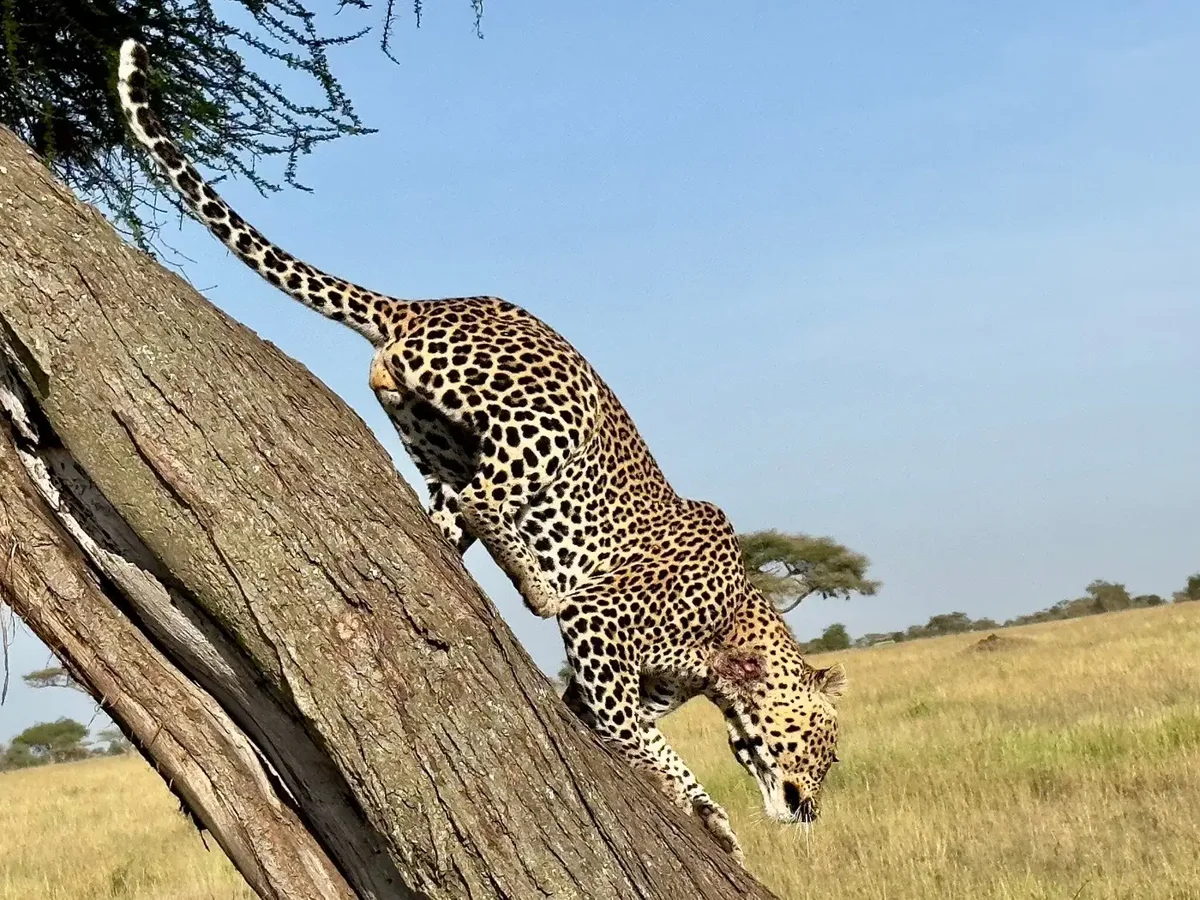
Finally, do not choose an itinerary only for one famous photograph. The Serengeti offers far more than river crossings: lions, cheetahs, leopards, elephants, giraffes, buffalo, zebra, wildebeest and many bird species all make up the experience.
Frequently asked questions
When is the best time for a Serengeti migration safari?
It depends on what you want to see. Late January and February are best for calving in the southern Serengeti and Ndutu, while July to September is the main window for Mara River crossings in the northern Serengeti.
How many days do I need?
Four or five days can work if your time is limited, but six to eight days give you more flexibility to stay with the herds and fewer camp changes.
Can a river crossing be guaranteed?
No. Crossings are natural events. We plan enough nights in the right area to give you the best chance, but nobody can promise a crossing on a particular day.
To start planning, tell us your travel dates and which stage of the migration you most want to see. We will suggest where to be, how long to stay and which camps to use, with a clear, itemised quote.