

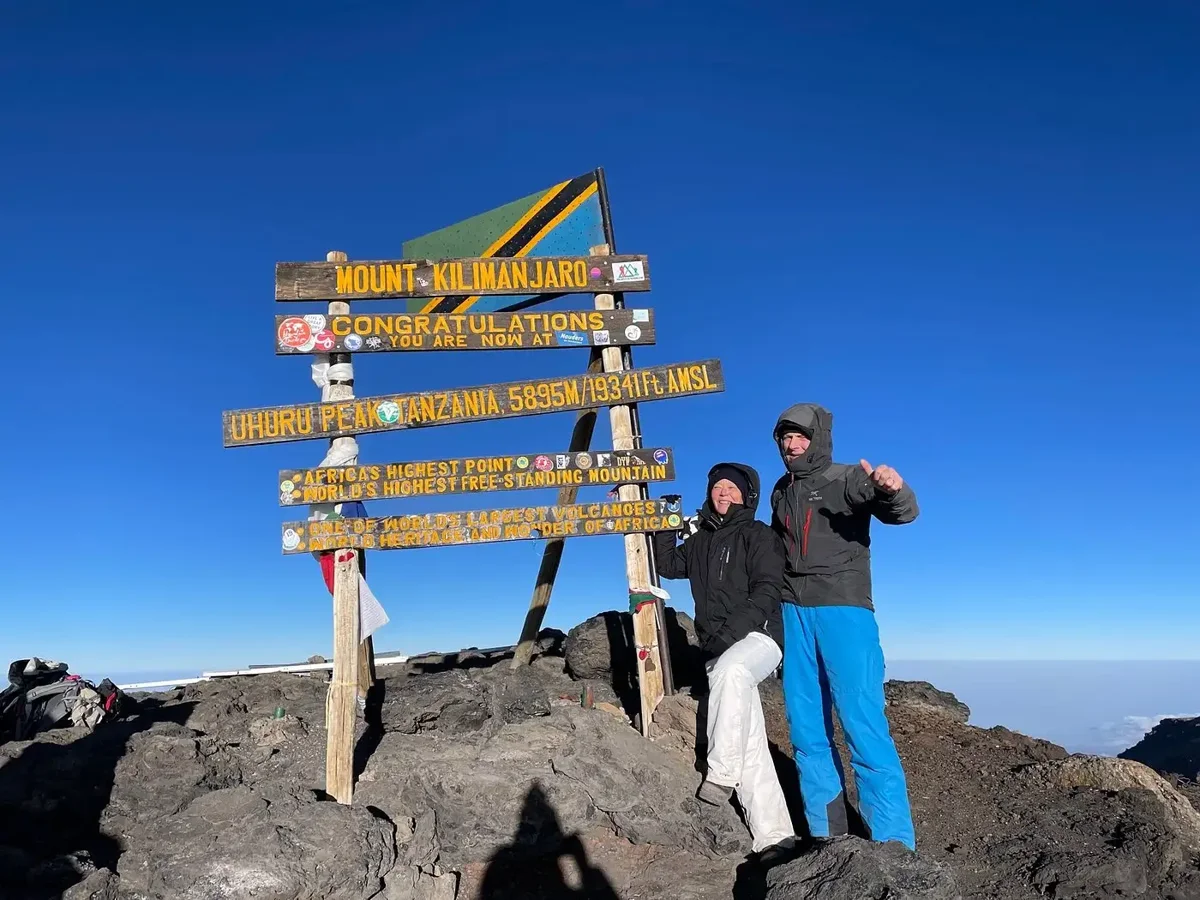
Mount Kilimanjaro is the highest mountain in Africa, rising to 5,895 metres at Uhuru Peak. Our team is based in Moshi, at the foot of the mountain, and guided climbs are a large part of what we do. None of the standard routes needs ropes, ice axes or technical climbing skills, but reaching the summit is still a serious undertaking: several days of trekking, a big gain in altitude, changeable weather and a long, cold summit night.
Every climber on Kilimanjaro goes with a guide, because Tanzania National Parks requires it. So the real decisions are the operator, the route and the length of the itinerary.
Choosing a route for a guided climb
There are six established routes: Marangu, Machame, Lemosho, Rongai, Umbwe and the Northern Circuit. They all end at Uhuru Peak, but they start from different gates, pass through different scenery and, most importantly, give your body different amounts of time to adjust to the altitude.
Machame
Machame is the most climbed route on the mountain. It starts at Machame Gate on the south-west side, is a camping route and passes through rainforest, heath and moorland and alpine desert on the way to the summit. Its daily rhythm of climbing high and then dropping to sleep lower helps acclimatisation, and the Barranco Wall, a scramble of around 300 metres that needs your hands but no technical equipment, is the section most climbers remember. We recommend the 7-Day Kilimanjaro Trekking - Machame Route over the six-day version, because the extra day at Karanga Camp makes summit day noticeably easier on the body.
Lemosho
Lemosho starts at Londorossi Gate on the west side and crosses the Shira Plateau, open moorland at 3,600–3,840 metres, before joining the southern side of the mountain. Climbers go up to Lava Tower (4,600 m) and then down to Barranco Camp (3,950 m) to sleep. The first days are quieter than on Machame, and it has the best acclimatisation profile of the southern and western routes. The 8-Day Kilimanjaro Trekking - Lemosho Route adds a rest day at Shira Camp, and it is the itinerary we recommend most often to first-time climbers.
Northern Circuit
The Northern Circuit is the longest route. It shares the Lemosho approach for the first two days, then swings north to circle most of the mountain before the summit. It is the least busy route and, at nine to ten days, gives the most time to acclimatise. The 9-Day Kilimanjaro Trekking - Northern Circuit Route suits climbers who have the time and want the most gradual ascent.
Marangu
Marangu is the oldest route and the only one where you sleep in huts instead of tents. It goes up and comes down the same way, from Marangu Gate on the south-east side. Its gradients are the most even, but it has no climb-high, sleep-low days, so it is not the easy option it is sometimes sold as. The 6-Day Kilimanjaro Trekking - Marangu Route adds an acclimatisation day at Horombo Hut, and we always recommend it over the five-day version.
Rongai and Umbwe
Rongai is the only route that approaches from the north, starting near the Kenyan border. The terrain is drier and more open, the trail is quiet, and the descent follows the Marangu route, so you see two sides of the mountain. Umbwe, from the south, is the shortest and steepest approach and gains height faster than any other route. We suggest Umbwe only to climbers with real high-altitude experience.
Never choose a route simply because it has the fewest days. A rushed ascent is much harder at altitude, and for most climbers we recommend at least seven days on the mountain. Before booking, ask your operator to talk you through the daily distances, sleeping altitudes and acclimatisation plan.
What to expect on a guided Kilimanjaro climb
Before the climb
Most climbs start in Moshi. You meet your guide, go through the itinerary, check your equipment and then drive to the gate for your route. Moshi is a practical base because the gates can be reached by road from town, and you come back there after the descent.
On the trail
The first days take you from the cultivated lower slopes into rainforest, which is lush and humid, with dense vegetation and the sounds of wildlife. Higher up, the landscape opens into heath and moorland, with giant plants and rocky ground. Above roughly 4,000 metres you reach alpine desert: temperatures drop, plants become scarce and the air holds noticeably less oxygen.
Our guides set a slow, steady pace from the first morning. It saves energy and gives your body more time to adjust to the altitude.
Summit night
The summit attempt is the hardest part of the climb. Depending on the route, you set off during the night or in the very early morning, walking in the dark and cold on steep ground, aiming to reach the crater rim at Stella Point (5,756 m) and then Uhuru Peak around dawn or soon after. Your guide watches each climber closely, manages the pace and decides how the group responds if the conditions or someone's health change.
The descent
After the summit you descend a long way in a short time, which is hard on the knees and legs, and many climbers underestimate it. Our climbs finish with a night in Moshi, a useful chance to recover before a safari, a beach stay or your flight home.
Preparing for altitude, weather and kit
Train for endurance rather than short bursts of hard exercise. Regular walking, hill hiking, stair training and longer days on your feet prepare you for consecutive days on uneven ground. Walk in the boots you plan to wear on the mountain: new boots can cause blisters if the climb is their first real use.
Temperatures change a great deal between the lower slopes and the summit, so pack in layers: light clothing for the forest, warm insulation for the upper mountain and a waterproof outer layer, because the weather can turn quickly. The essentials are:
- Hiking boots that are already broken in
- Warm layers, gloves and a warm hat
- A waterproof jacket and rain protection
- A sun hat and sunglasses
- A headlamp
- Water bottles or a hydration system
- A sleeping bag on camping routes
- A daypack
Ask your operator for a full kit list before you travel. We can arrange rental for items you don't already own.
Altitude sickness
Kilimanjaro is high enough for altitude sickness to be a real risk on every route, and a longer itinerary is the best protection. Tell your guide straight away if you have a headache, nausea, unusual tiredness, dizziness, confusion, difficulty walking or trouble breathing. These symptoms should never be ignored. Our climbs carry an oxygen cylinder and a pulse oximeter for monitoring.
Check that your travel insurance covers high-altitude trekking to at least 6,000 metres and includes helicopter evacuation. If you have a medical condition or take regular medication, talk to your doctor before you book.
What to check before booking a guided climb
The cheapest quote is rarely the best one if it means a shorter route, a smaller support team or a rushed acclimatisation schedule. Whoever you climb with, ask about:
- Whether the company is licensed and how experienced its guides are
- How many climbers each guide looks after and how the support team is organised
- What the porters carry, the weight limits and how porters are employed and paid
- The emergency procedures and safety equipment
- Whether park fees, the rescue fee, transfers, meals and accommodation in Moshi are included
Our Kilimanjaro prices include airport pickup and drop-off at Kilimanjaro International Airport (JRO), a night in Moshi before and after the climb, transfers to and from the gate, all park fees and the KINAPA rescue fee, three meals a day on the mountain, four-season tents, a licensed guide and assistant guide, a cook and porters. Tips, travel insurance and personal gear are not included.
When to climb
The clearest, driest months on the mountain are June to October and late December to February. Climbs run outside those windows too, but we steer most climbers away from March to May, when the long rains make the upper slopes cold and slippery.
Adding a safari or Zanzibar
Many of our climbers go on to a safari in Tarangire, Ngorongoro and the Serengeti, or finish with a few days on Zanzibar. One week is enough for the climb on its own; with two weeks you can comfortably add a four- or five-day safari. A typical plan is a preparation day in Moshi, a seven-day climb, a recovery night and then a four-day safari.
Frequently asked questions
Do I need a guide to climb Kilimanjaro?
Yes. Tanzania National Parks requires every climber to go with a guide. The standard routes are treks rather than technical climbs, so the guide's job is pacing, safety and looking after the group.
How many days should a guided Kilimanjaro climb take?
We recommend at least seven days for most climbers. The eight-day Lemosho and seven-day Machame suit most first-timers, and the nine-day Northern Circuit gives the most time to acclimatise.
Which route has hut accommodation?
Only Marangu. All the other routes are camping routes, with tents carried and set up by the crew.
To start planning, tell us your dates, how many people are climbing and how much time you have. Our team in Moshi will suggest a route and itinerary length that suit you, and send you a full quote.